This post contains affiliate links. If you book or buy through them, I may earn a small commission at no extra cost to you.
We left very early that morning, because for the second time on this trip, we had a full day planned. Again. You would think we would have learned our lesson after the Wine Route, but no. The night before, we had spontaneously added two extra stops to an already packed itinerary. This is a running theme with us, and it is not always a good one, as you will see.
Epernay, the Capital of Champagne
Our first stop was Epernay, a small town on the River Marne that punches enormously above its weight. Reims may be the historic capital of the wider Champagne region, but Epernay is considered the capital of champagne the drink, home to some of the most famous names in the business. The town itself has been rebuilt many times over the centuries after various conflicts, so do not expect grand old architecture at every turn. What you come for is underneath the streets, and along one very famous avenue.
That avenue is the Avenue de Champagne, nearly a kilometre of grand private mansions built by the great champagne houses from the late 18th century onwards, each one competing to look more impressive than the last. Beneath it all sits a hidden city of chalk cellars, over 100 kilometres of them, holding an estimated 200 million bottles at any given time. The avenue was recognised by UNESCO in 2015 as part of the wider Champagne Hillsides, Houses and Cellars listing, and honestly, walking down it, you understand why.
After fighting for our lives to find parking anywhere near the town centre (a recurring theme of this trip, if you have been following along), we made our way towards the avenue. After exploring the centre for a bit, our first proper stop was the headquarters of Moët & Chandon. We are not champagne people, as established, but I wanted to try one straight from the source at least once.
Further along the Avenue de Champagne we passed the grand houses of Perrier-Jouët, Pol Roger, Mercier and de Castellane, each with its own version of the same idea, an impressive mansion built to sell you on a bottle. We tinkered with the idea of stopping for a proper tasting somewhere else along the avenue, but time was limited. We had not learned our lesson from the Wine Route, remember, and the night before we had decided to add two more stops to an already full day.
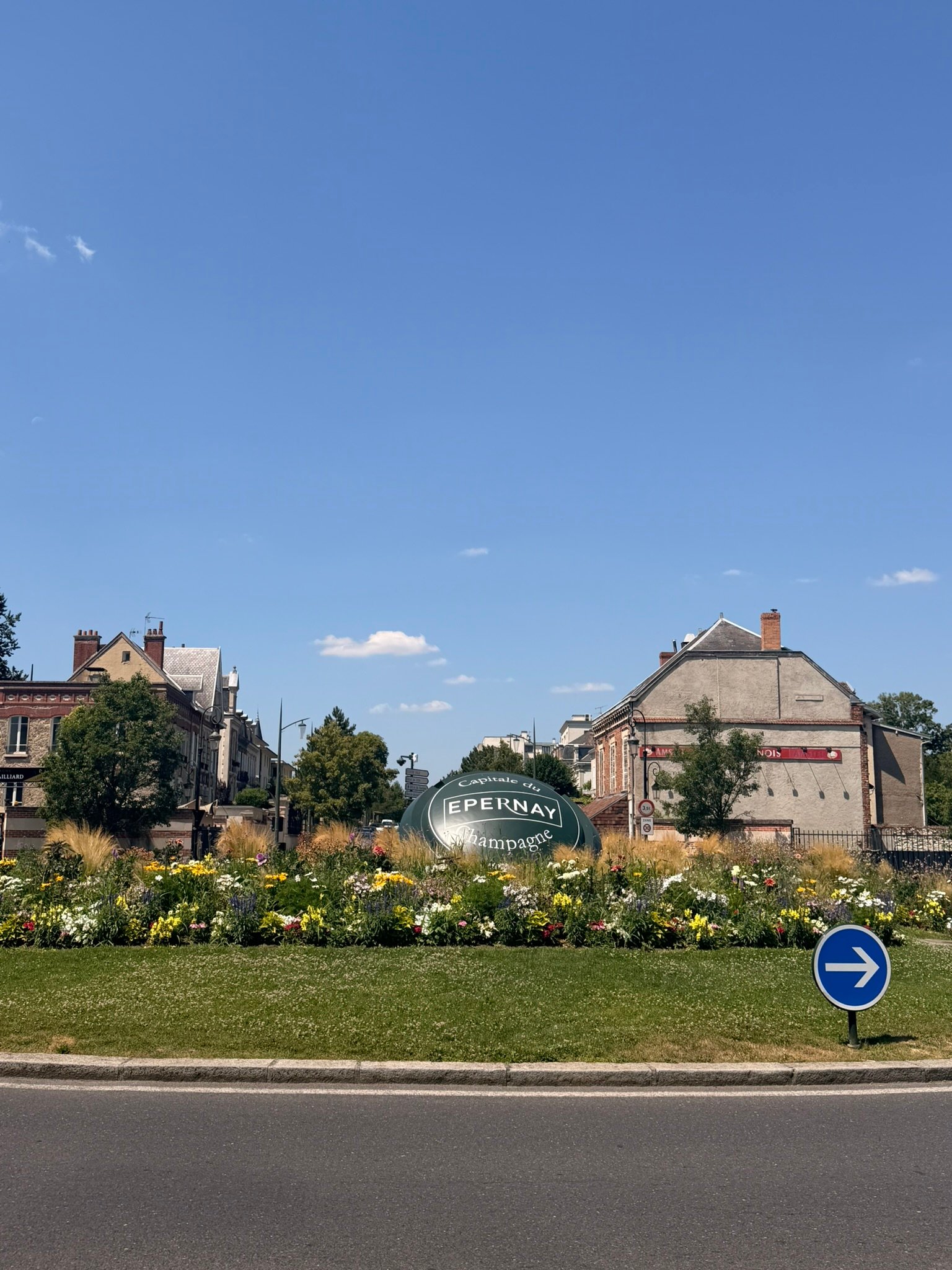
Arriving in Epernay
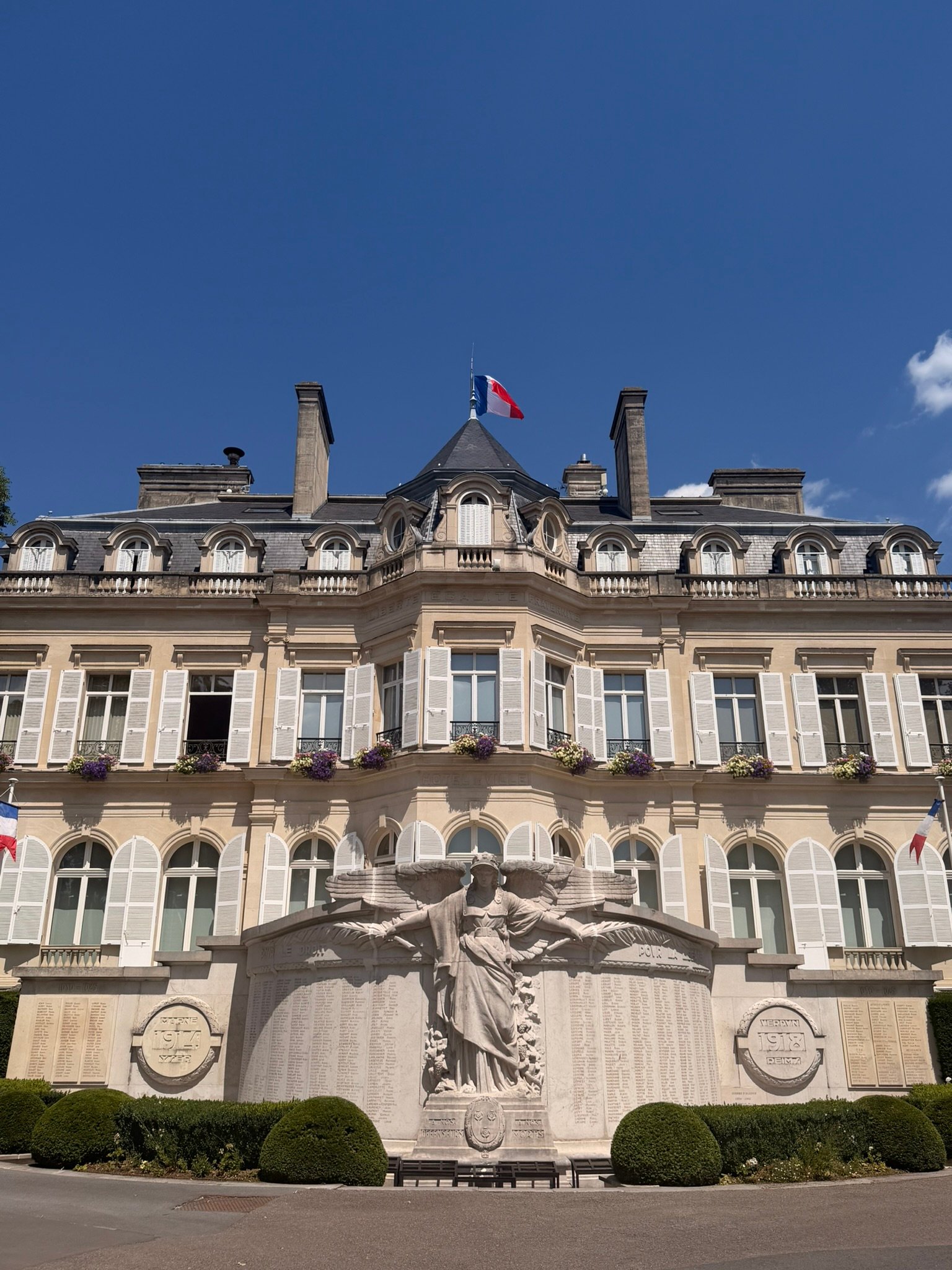
Walking the Avenue de Champagne
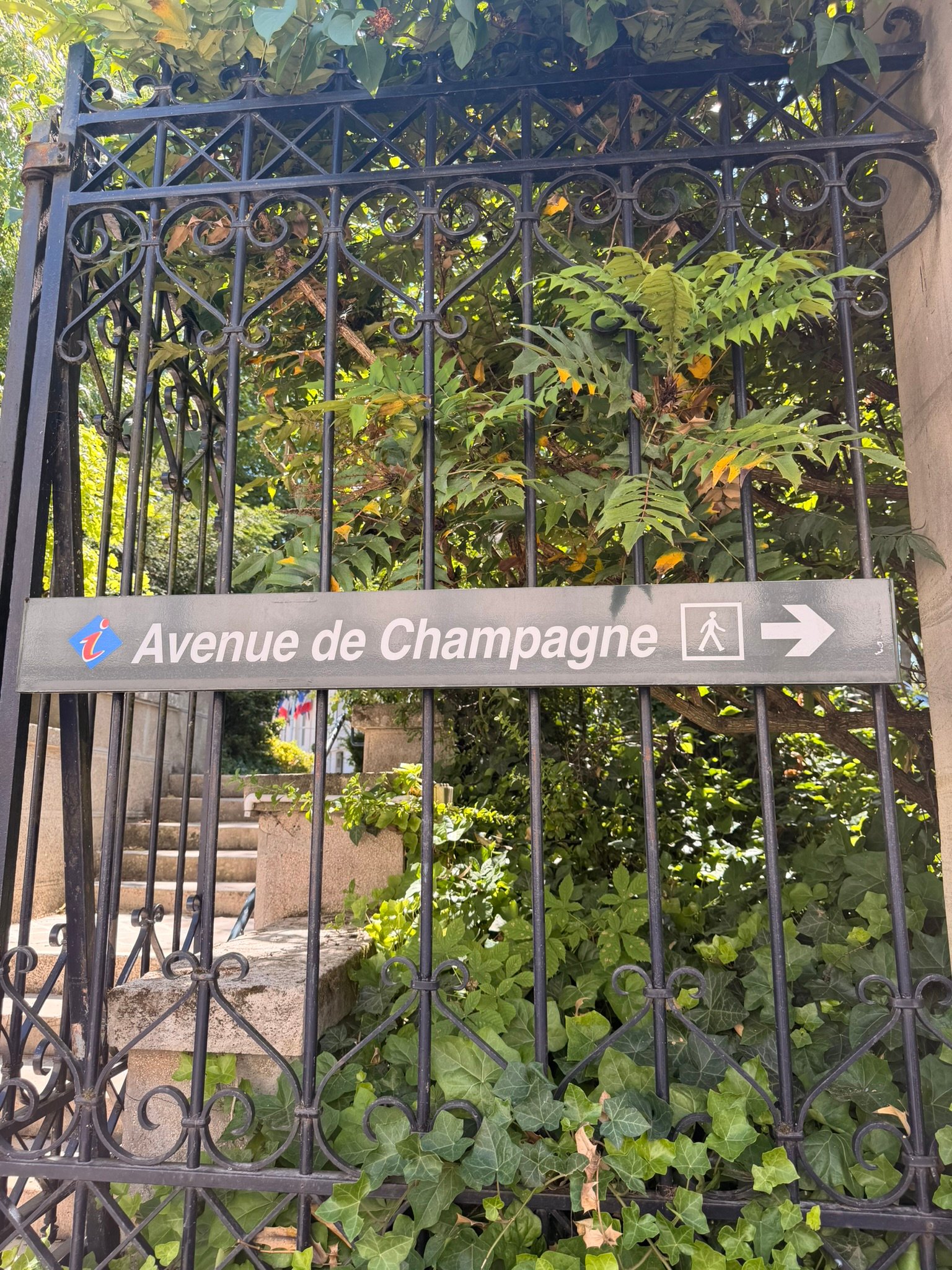
The famous street sign itself
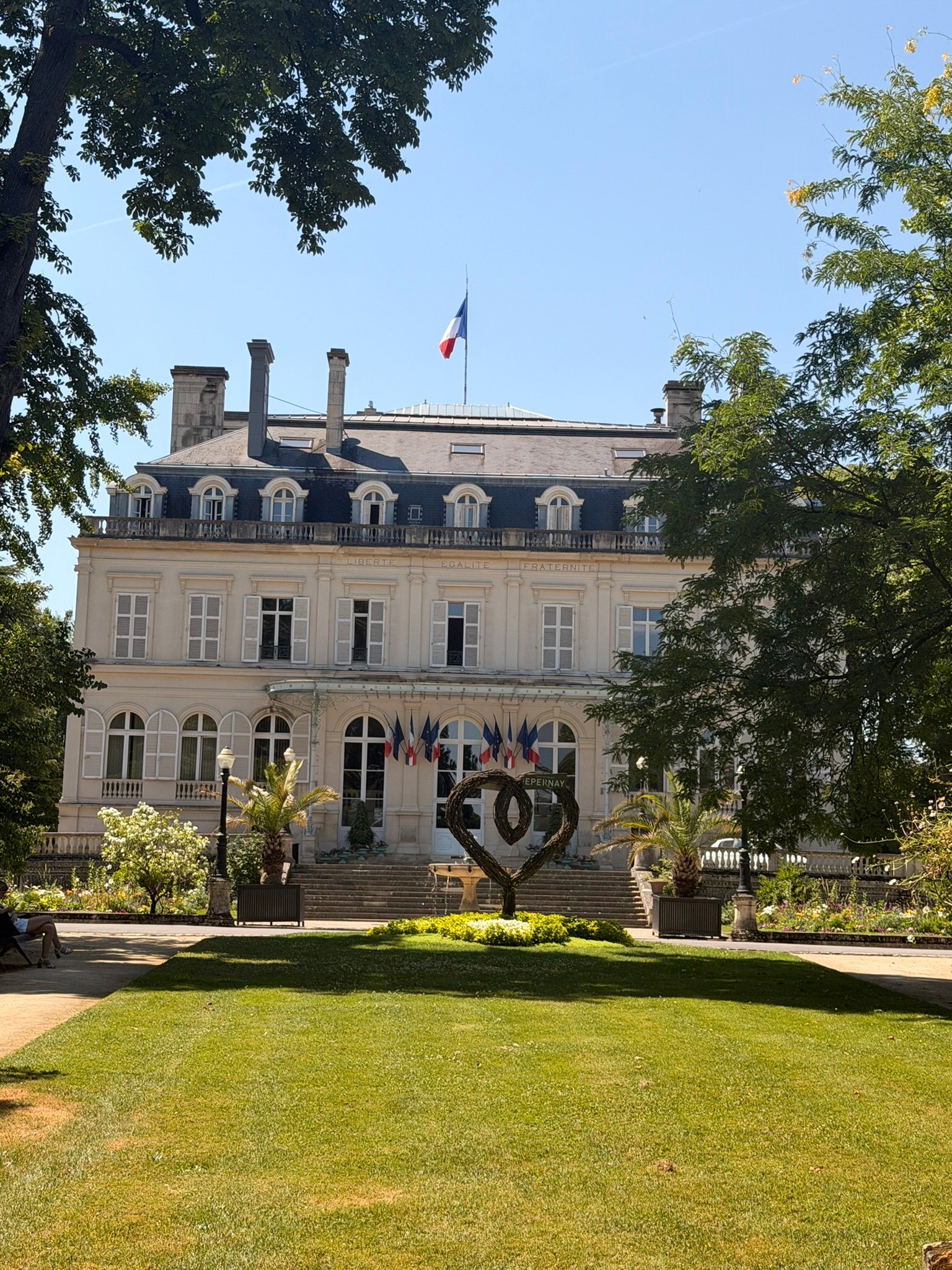
One of the grand champagne house mansions along the avenue
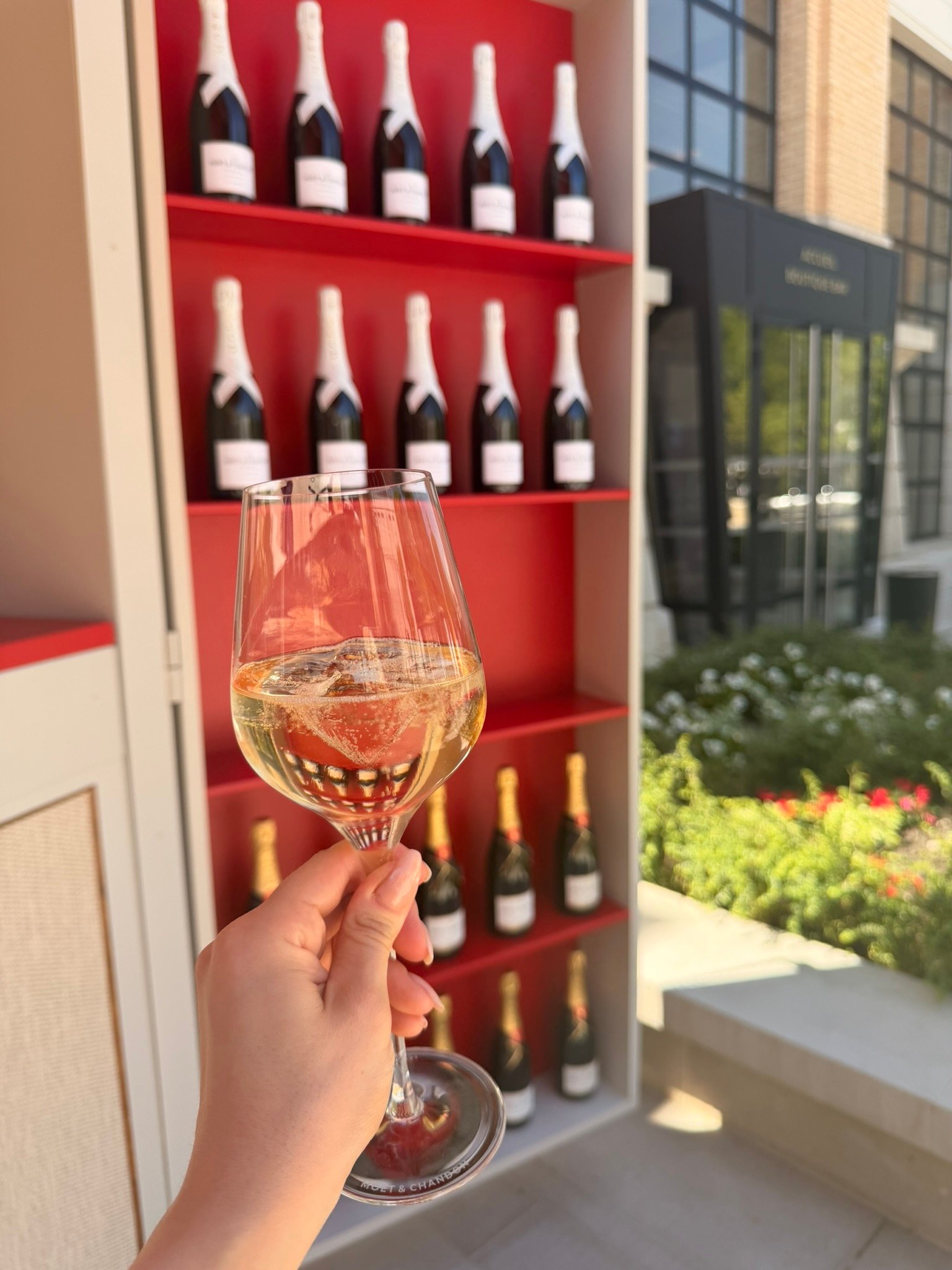
Moët & Chandon’s headquarters
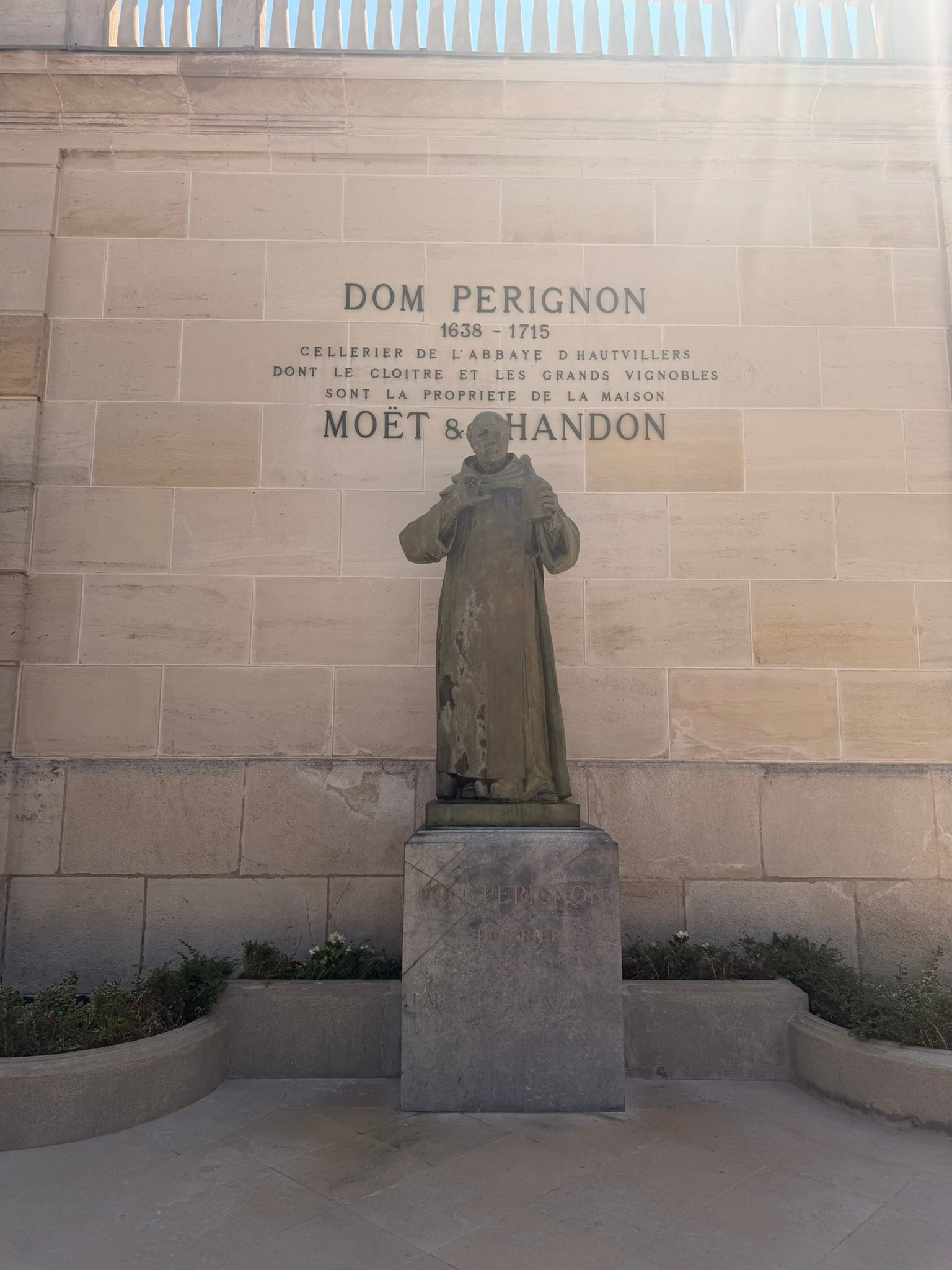
The Dom Pérignon statue in Moët & Chandon’s courtyard
Hautvillers, the Birthplace of Champagne
From Epernay it was a short drive to Hautvillers, a small hilltop village said to be the birthplace of champagne itself. This is where the Benedictine monk Dom Pierre Pérignon spent 47 years as cellar master of the Abbey of Saint-Pierre, from 1668 until his death in 1715. What he genuinely contributed were real, lasting innovations in grape growing, blending and winemaking that helped shape what champagne became. He is buried in the choir of the abbey’s Saint-Sindulphe church, where his tombstone can still be seen today.
We wandered the village’s quiet, picturesque streets, past the wrought iron shop signs the area is known for, and saw a statue of Dom Pérignon in the village itself as well as the church where he is buried. We left with a souvenir, a bottle of local champagne, which we are saving for when we have finished all our wedding preparations. A small celebration for all the work, effort and time that has gone into what will be the biggest party of our lives.
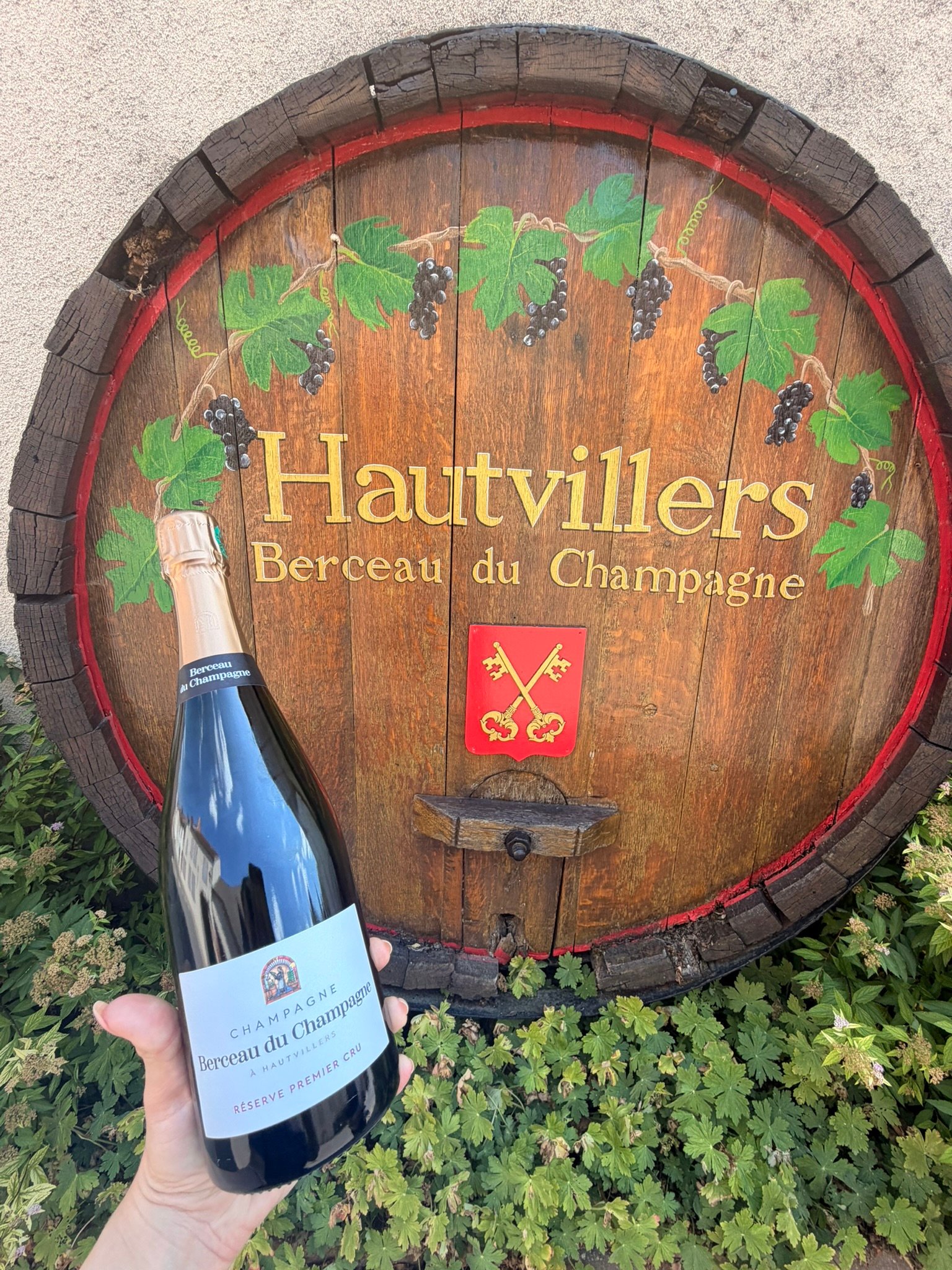
Wandering the quiet streets of Hautvillers
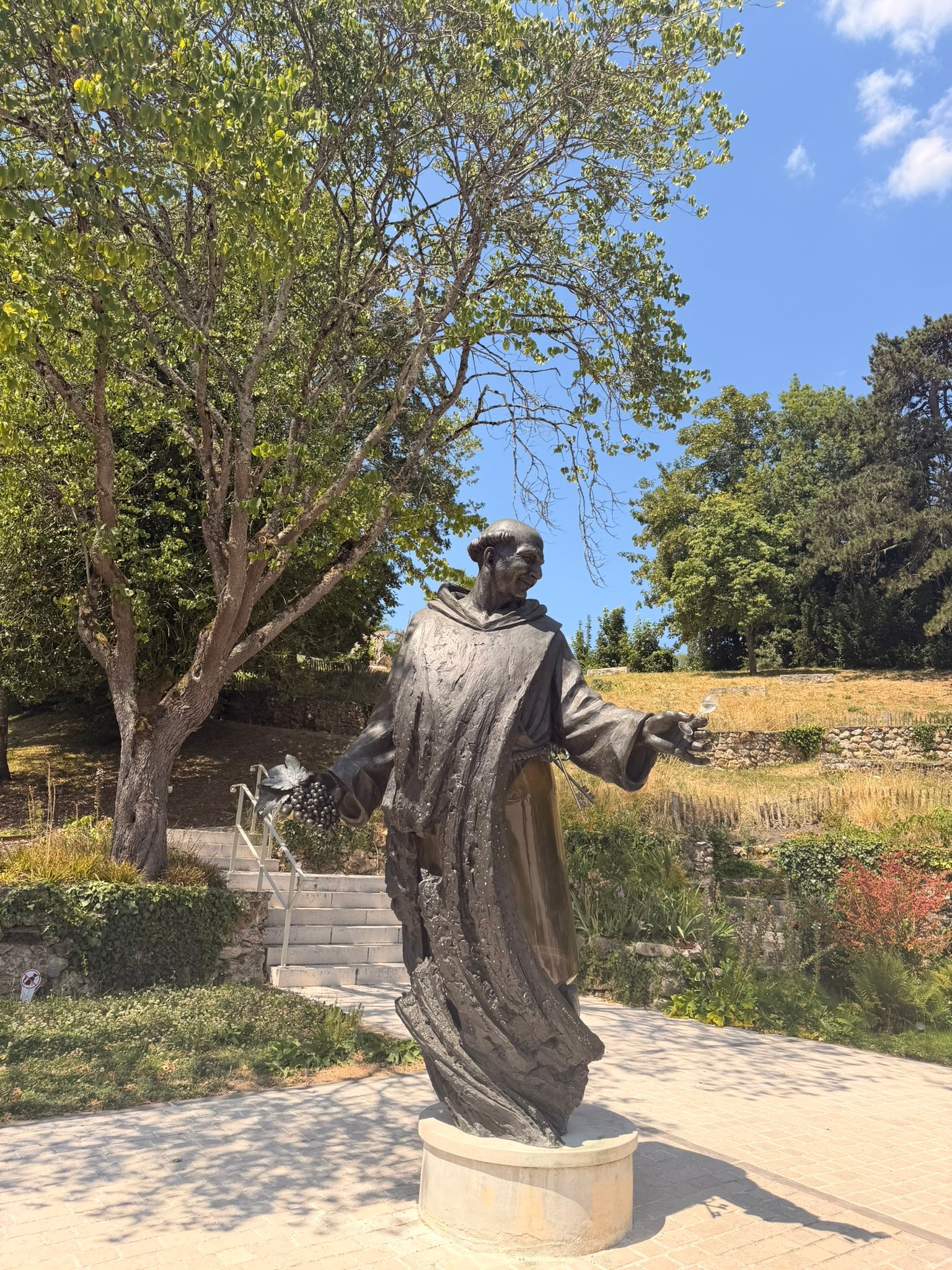
Another Dom Pérignon statue, this one in Hautvillers itself
Reims, the City of Kings
From Hautvillers we drove on to Reims, where we had planned to stop, eat properly and taste more champagne. Reims has a genuinely remarkable history behind it. It was here, in 496 AD, that Clovis, the first King of the Franks, was baptised, an event that set the precedent for royal anointing in Reims for centuries afterwards. From then until 1825, some 25 to 33 kings of France (depending which source you read) were crowned in Reims Cathedral, including Charles VII in 1429 with Joan of Arc present. The cathedral itself is a Gothic masterpiece and a UNESCO World Heritage Site, home to over 2,000 statues and stunning stained glass, including windows by Marc Chagall.
Reims also has its own champagne heritage, home to major houses like Veuve Clicquot, Taittinger, Mumm, Ruinart and Pommery, alongside its more famous local sweet, the biscuit rose de Reims, a pink biscuit created around 1690 by Maison Fossier, traditionally dipped in champagne or red wine.
Unfortunately this is where our day started to go wrong. We struggled to find parking, and by the time we did, we had already burned through half an hour of our allotted time. On the way into Reims we had actually driven past a Veuve Clicquot café near the edge of the city, about fifteen minutes from the centre, but we had not researched it beforehand and did not think much of it at the time. We walked to Notre-Dame Cathedral and then towards the city centre. By the time we had seen most of the centre and decided we would love to sit down for a proper glass of Veuve, it was too late, the café was closing, and there was simply no way to get back there and enjoy it in time. That was our thirty minutes of faff, working out it was not going to happen. So instead we decided to try our luck finding the Veuve Clicquot headquarters on foot.
We did manage to see the main landmarks in the city centre, the cathedral itself, the Palais du Tau next door where the post-coronation banquets used to take place, and the Roman-era Porte de Mars gate, before heading back to the car for our next stop.
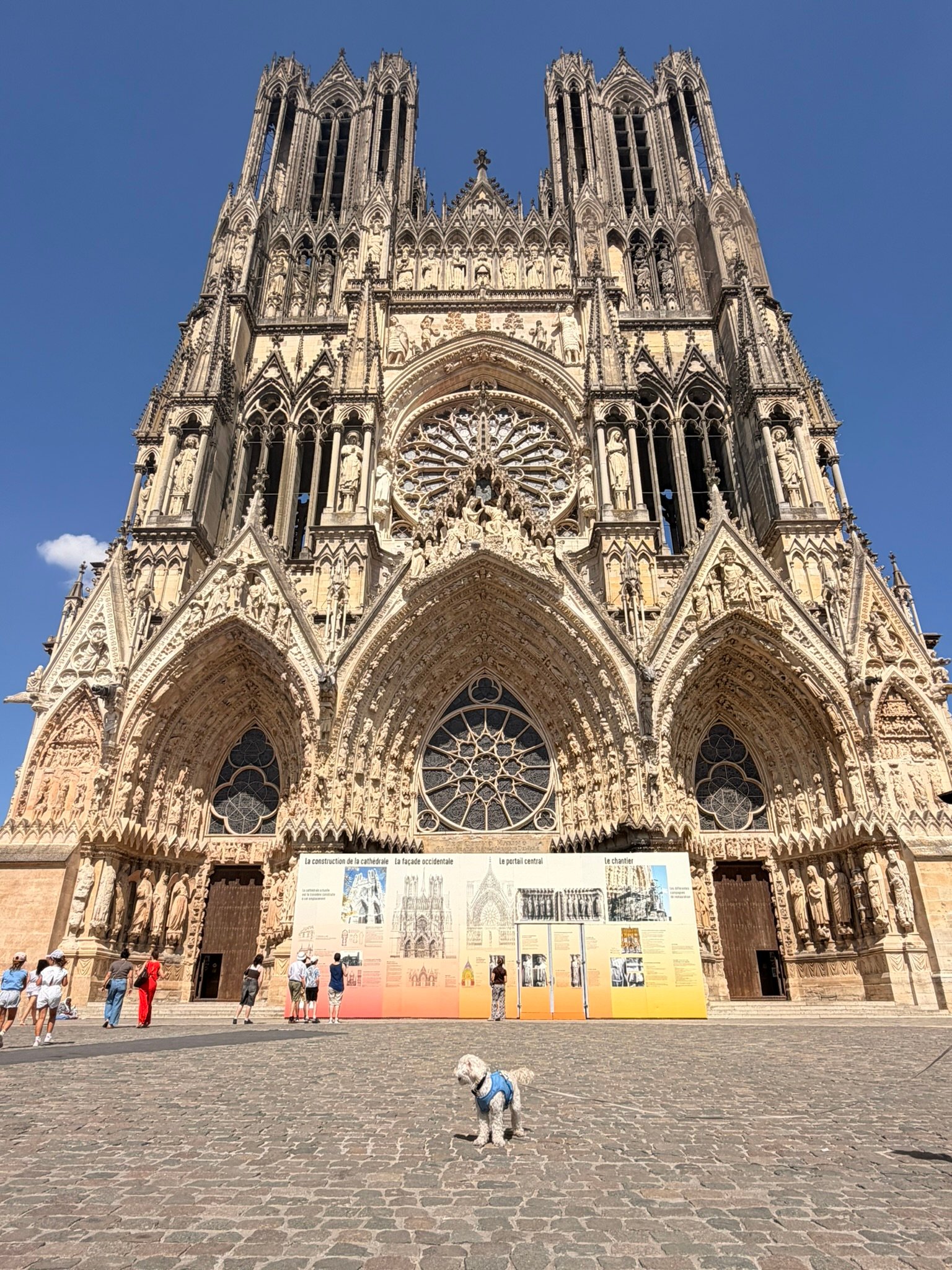
Notre-Dame de Reims, coronation cathedral of French kings
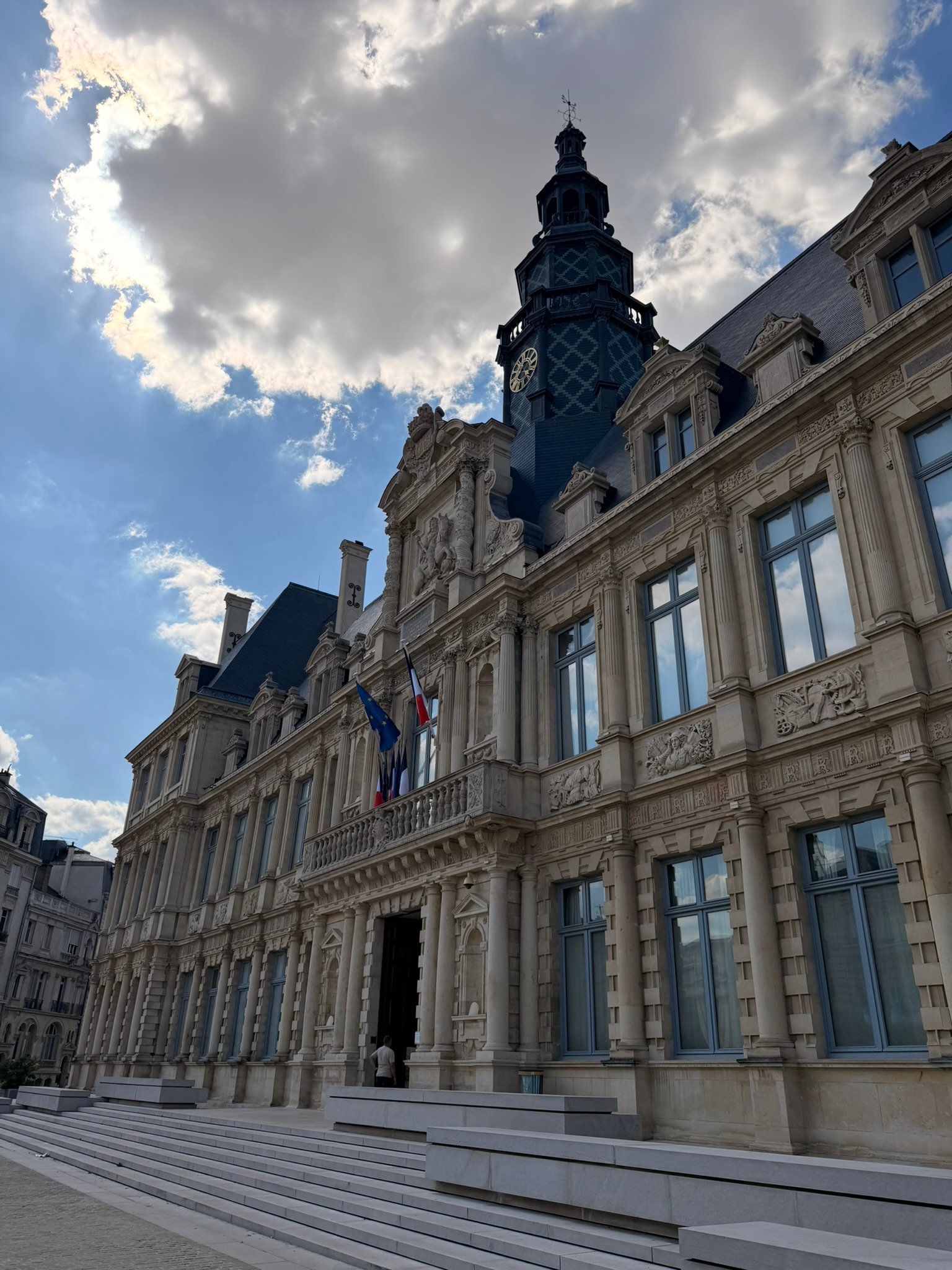
One of the grand old buildings in Reims city centre
Château de Pierrefonds
A quick note before this section, since it matters for planning purposes: Château de Pierrefonds is not actually in the Champagne region. It sits in the Oise department, in Picardy, over an hour from Reims towards Paris. We added it as a last minute stop on our way to Paris rather than as part of the Champagne leg of the trip, and I am glad we did, even though it did not go entirely to plan.
The castle’s story starts in the 12th century, with the version most visitors picture today largely a 19th century creation. The medieval fortress was rebuilt between 1393 and 1407 for Louis, Duke of Orléans, then partially dismantled in 1617 and left as a ruin for over two centuries. Napoléon I bought the ruins for a modest sum in 1810, and it was Napoléon III who, in 1857, commissioned architect Eugène Viollet-le-Duc to restore it into the fairytale silhouette it has today. The result is technically a 19th century interpretation of what a perfect medieval castle should look like, rather than a strict historical restoration, which is part of why it works so well on screen.
And it really does work on screen. Château de Pierrefonds served as the exterior of Camelot throughout all five series of the BBC’s Merlin, from 2008 to 2012, with its towers, courtyard and ramparts appearing across the whole show. I watched Merlin twice through and would have loved to properly explore the filming location, but sadly we arrived after 6pm, after entry had already closed, so we only got to see it from a distance. It is a genuinely pretty château even from afar.
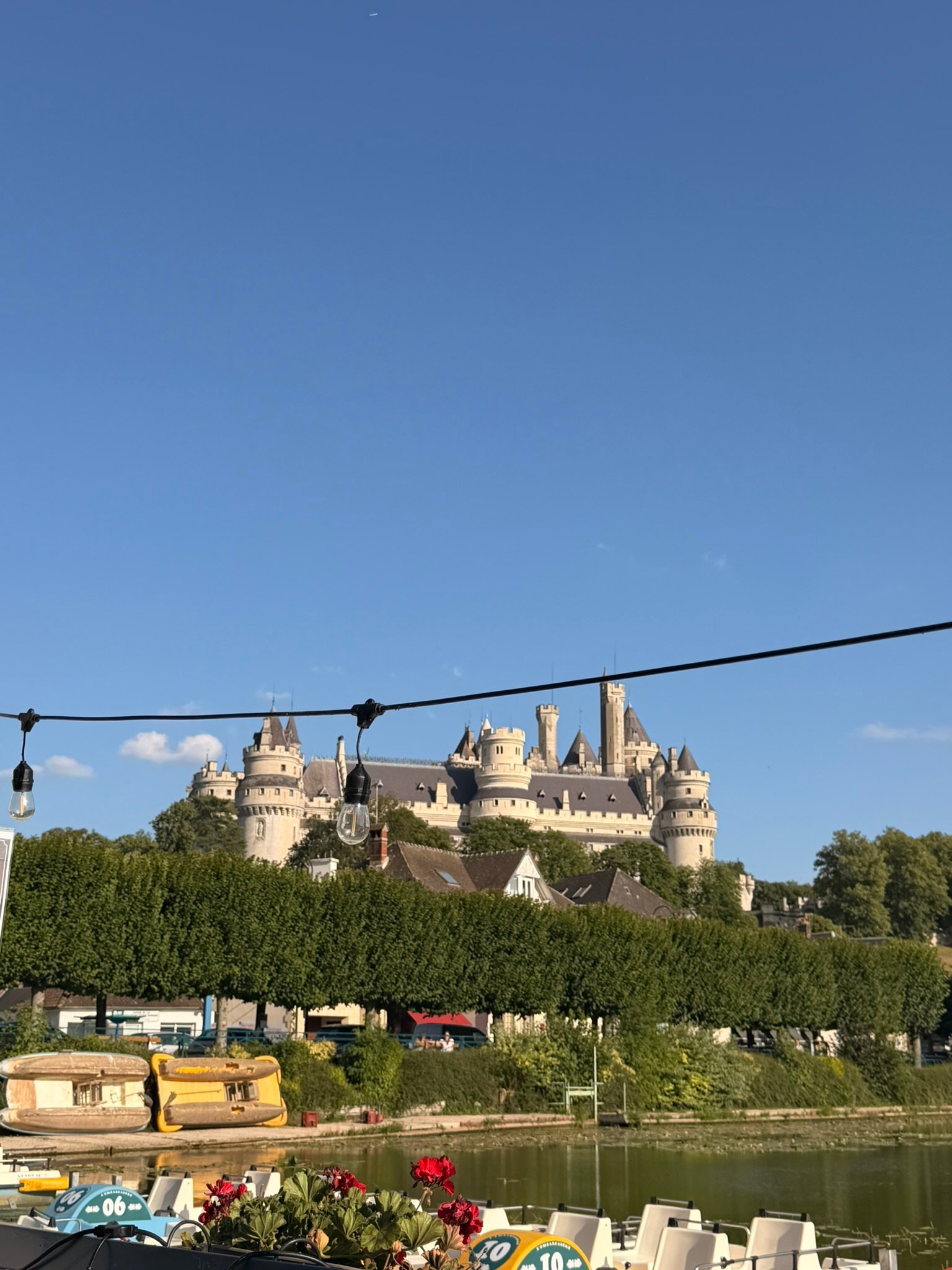
Château de Pierrefonds, seen from a distance after closing time
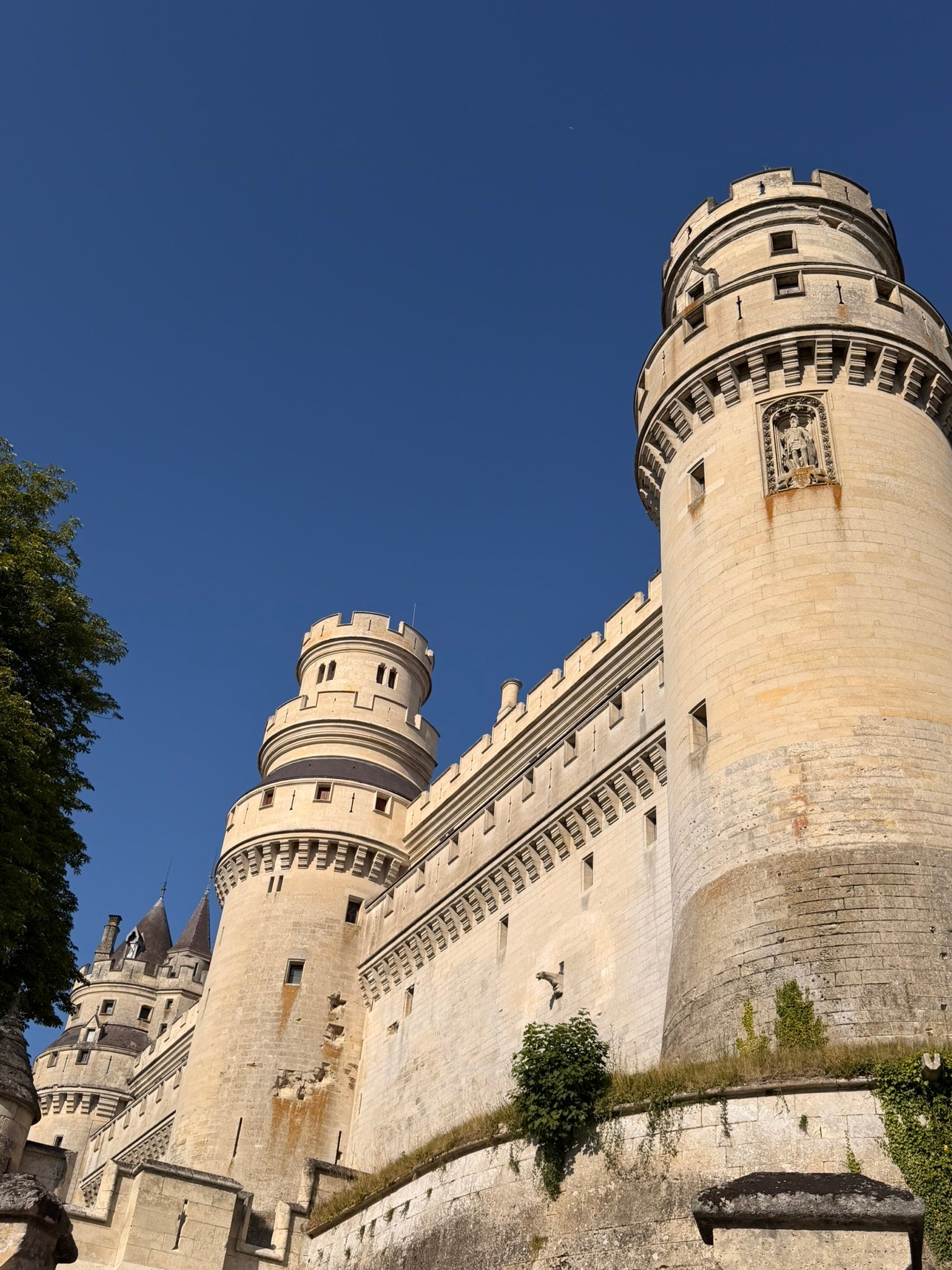
A closer look at the château, our Camelot that got away
We ended up eating at a restaurant by the water nearby, and honestly, I wish we had not bothered. Being right on the water meant it attracted all sorts – the smell, the wasps, the ants. By that point we were both deflated. We had such a great time at the first two stops of the day, and it all went a bit wrong after lunchtime. So we decided to just carry on to Paris, our base for the next three nights.
Our Route That Day: Epernay → Hautvillers → Reims → Château de Pierrefonds
Would I Recommend the Champagne Route? Absolutely
The Champagne region is genuinely beautiful. Vineyards stretch out on either side of the road, as dense and wide as you can imagine, and the villages and towns are really pretty. There is so much history behind it all, and it is worth it. I wholeheartedly recommend Epernay and Hautvillers. Reims felt more like a modernised city to me, and because of how little time we actually had there, I cannot honestly say yes or no to it as a whole – it deserves a fairer chance than we gave it. As for Château de Pierrefonds, remember it is not officially part of the Champagne region, but it is a natural stop on the way to Paris. I would recommend going early if you want to actually enjoy the castle and the village around it. Do not do what we did and arrive after closing.
If You Only Have a Few Hours in Epernay
- Avenue de Champagne
- Moët & Chandon cellars
- Château Perrier and its museum
If You Have More Time in Epernay
- Cellar tours at Mercier or Perrier-Jouët
- The De Castellane tower, for panoramic views over the town
- Musée du Vin de Champagne et d’Archéologie Régionale
- A walk or cycle out into the surrounding vineyards
- Hautvillers village and the Abbey of Saint-Pierre
If You Only Have a Few Hours in Reims
- Notre-Dame de Reims Cathedral
- Palais du Tau
- Porte de Mars
If You Have More Time in Reims
- Basilique Saint-Remi
- A cellar tour at Veuve Clicquot, Taittinger, Mumm or Pommery, booked ahead this time
- Place Drouet d’Erlon, for dining and nightlife
- Halles Boulingrin market
- Maison Fossier, for the pink biscuit factory tour
- Musée des Beaux-Arts de Reims
Things to Eat, If You Have Room
- Biscuit rose de Reims
- Jambon de Reims
- Coq au champagne
- Champagne, if you drink it
What We’d Book With More Time
We did not book any of these ourselves this time, but here is what looked worth it if you have more time to spend than we did.
Guided Tour of a Champagne Cellar with Tastings
A proper cellar tour and tasting in Epernay, the thing we did not have time for beyond our one glass at Moët. If you love the history as much as the drink, this covers both.
Book ThisReims Basilica: LUMINISCENCE
An immersive sound and light show at the basilica, a nice way to see Reims after dark and a different side of the city to the one we saw.
Book ThisTour of the Fossier Biscuit Factory
A one hour guided tour of the factory behind Reims’s famous pink biscuits, with tastings and a factory outlet shop at the end.
Book ThisCity Centre Discovery Tour and Champagne Tasting
A guided walk through the city centre paired with a proper champagne tasting, exactly the combination we missed out on with our rushed afternoon.
Book ThisChampagne and Family-Run Wineries Tour
A day trip out to smaller, family-run wineries, a good way to see the more artisanal side of champagne making beyond the big houses.
Book ThisEntry Ticket to Château de Pierrefonds
Book ahead, check the opening hours properly, and go early. Learn from our mistake on this one.
Book ThisMore Things to Do in Epernay
More Things to Do in Reims
If you’ve got questions, want to share your own experience, or just want to say hello, I’d love to hear from you.
Welcome to the travel diary. I’m glad you’re here.
– Elena (and Cookie 🐾)
Follow us on