Episode 10 · Cookie’s First Holiday Abroad
This post contains affiliate links. If you book or buy through them, I may earn a small commission at no extra cost to you.
We left before the sun had properly committed to being up. Today was the day we’d been building the whole trip around, in a way: the Alsace Wine Route. Not one stop, not two, but a whole string of them, strung along 170 kilometres of vineyard and half-timbering between the Vosges hills and the plain.
The Route des Vins d’Alsace is, rather wonderfully, the oldest wine route in France. It was created in 1953 for a car rally, of all things, with two convoys setting off at the same time from opposite ends and driving to meet in the middle. It’s stuck around ever since, winding through more than 70 wine villages, past ruined hilltop castles and a version of France that looks distinctly like itself, and slightly like Germany, and entirely like nowhere else.
We had, in true us fashion, a plan. And also, in equally true us fashion, we abandoned parts of it within the first hour.
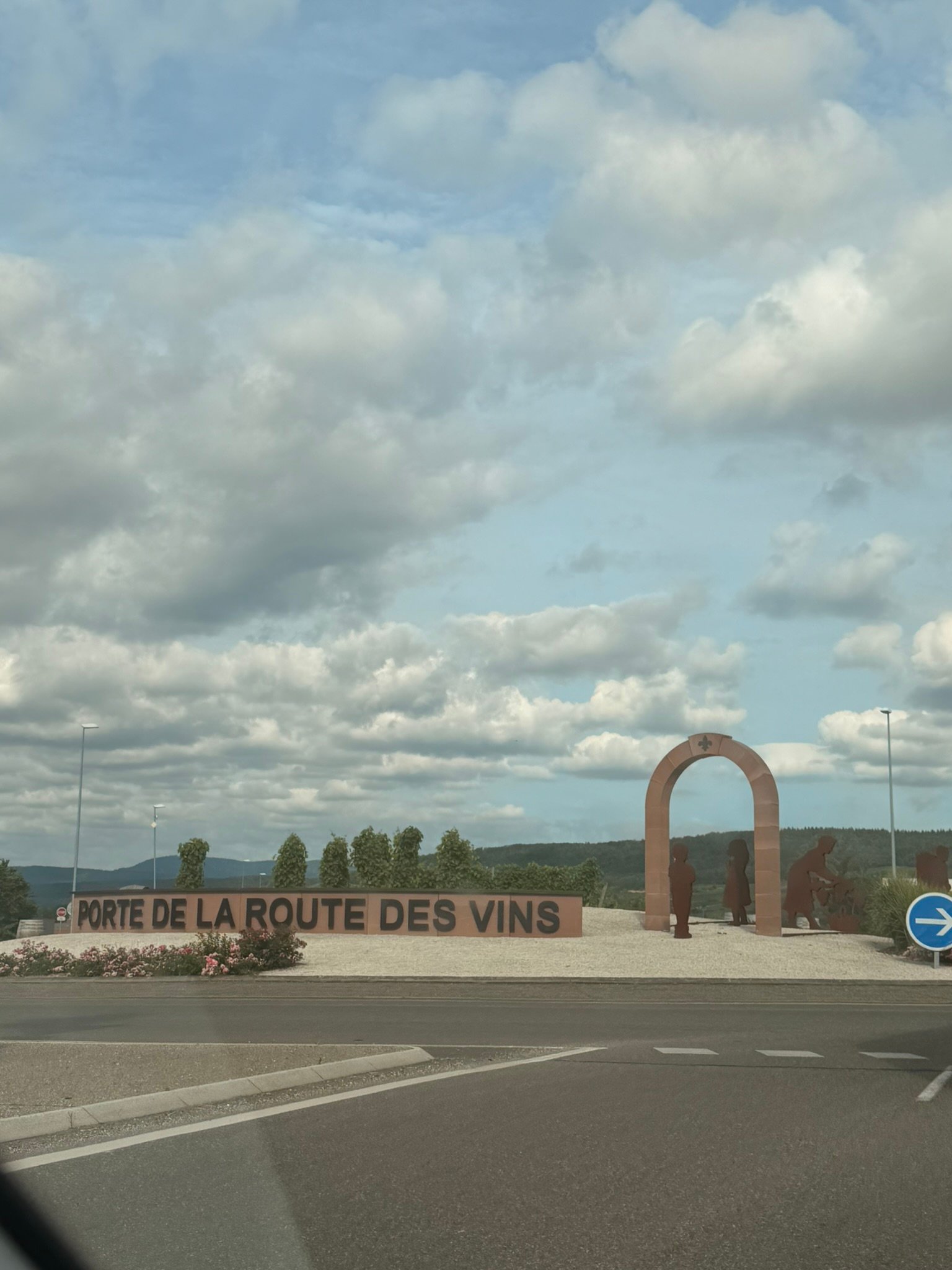
The gate marking the start of the route, La Porte de la Route des Vins
Marlenheim, Where the Route Begins
Marlenheim is known as the northern gateway to the wine route, and it felt like exactly that: a gentle, unhurried start before things got properly scenic. We parked, wandered the village centre, then climbed the hill to the Chapelle du Marlenberg for the view. It’s a short walk with a big payoff, vineyards rolling out below and, on a clear morning, the spire of Strasbourg Cathedral visible in the distance if you squint.
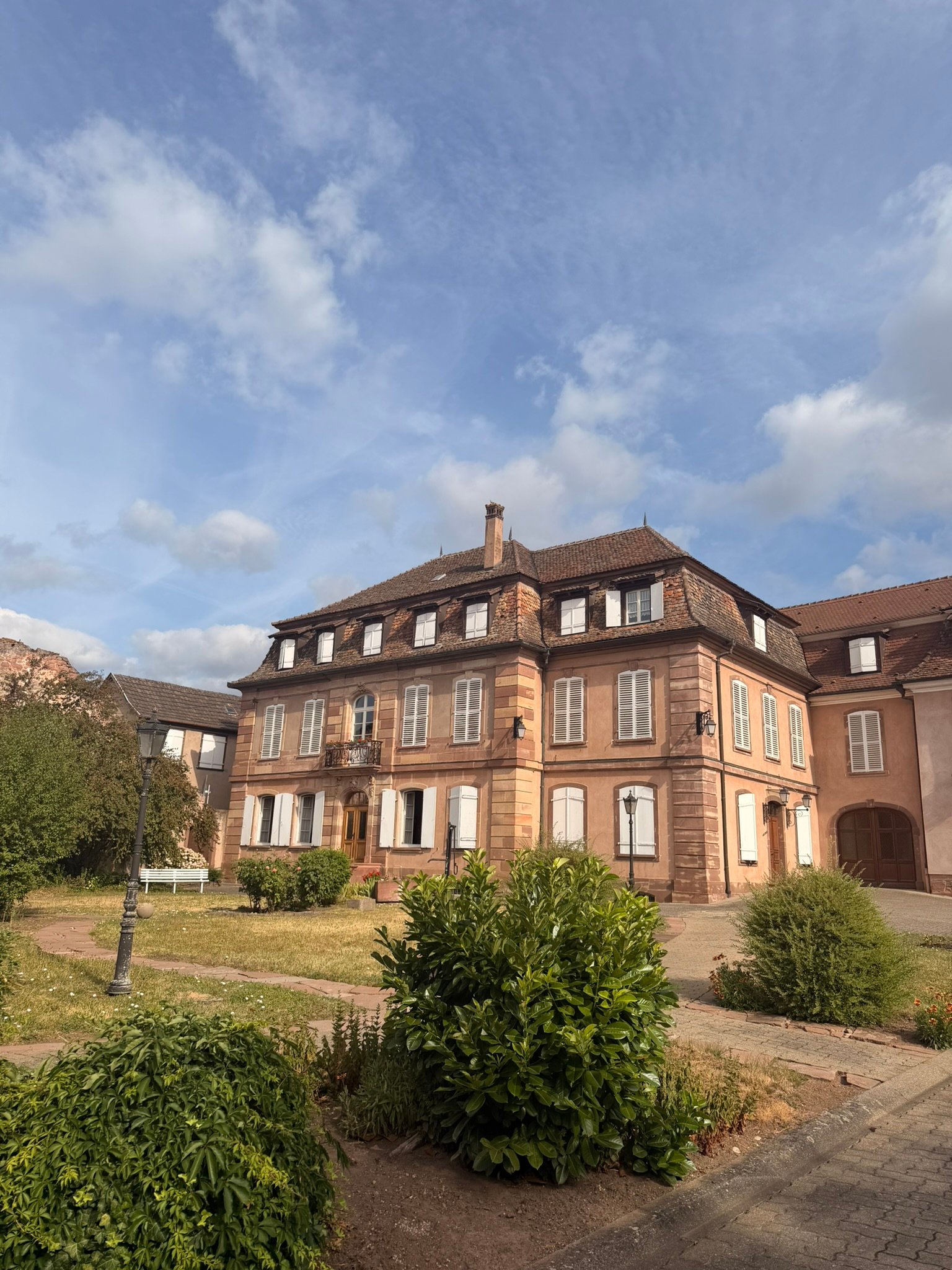
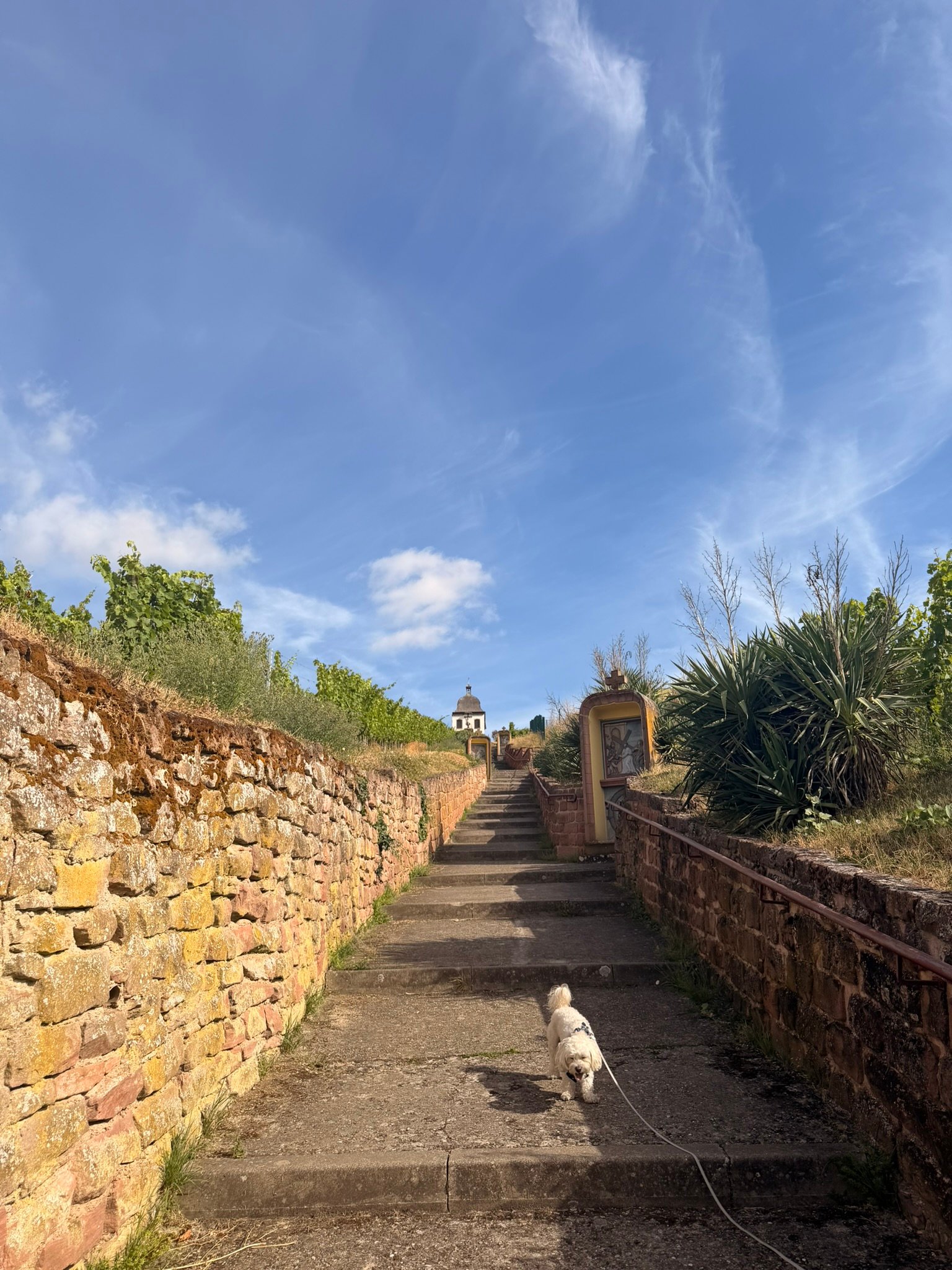
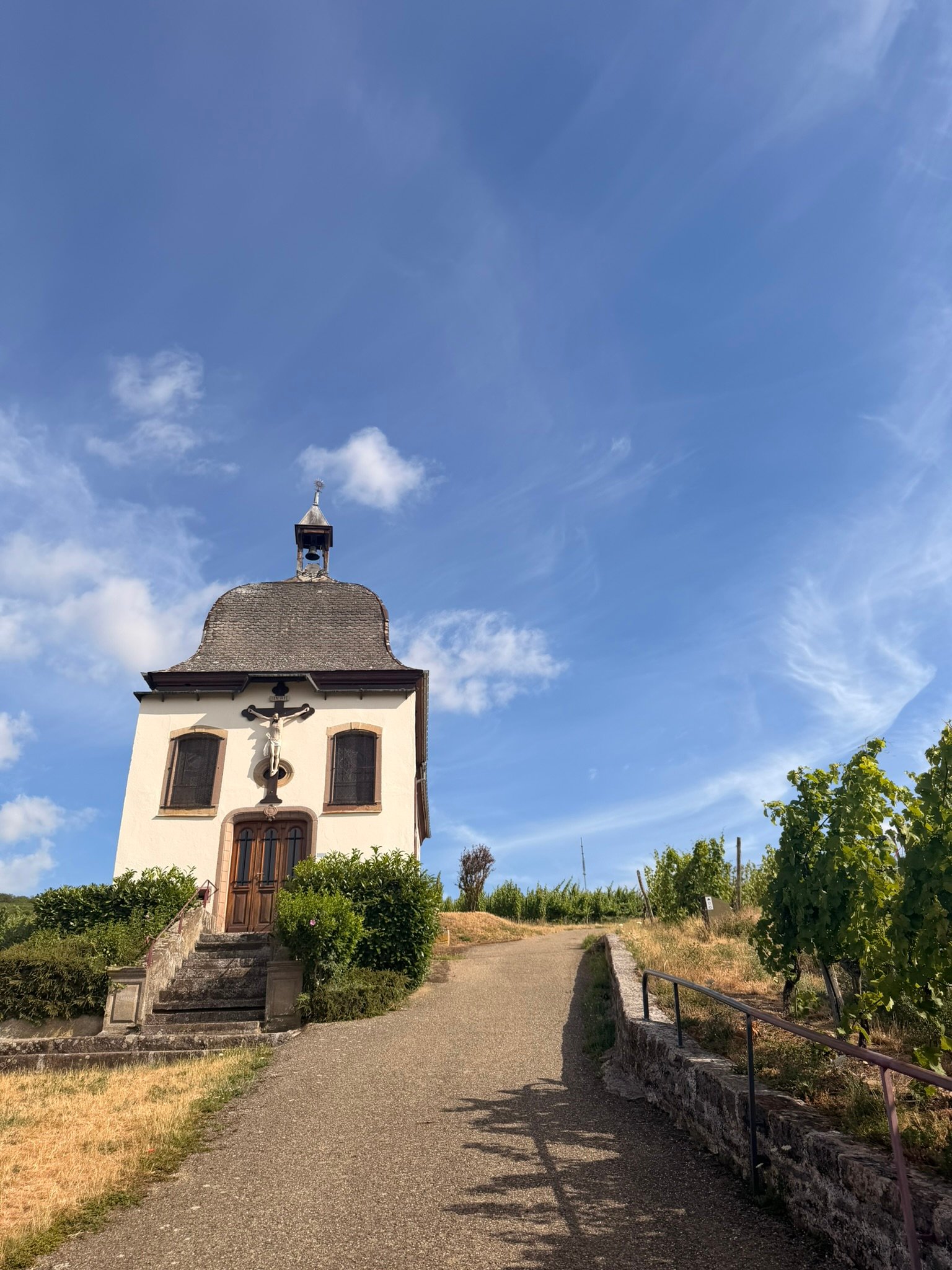
Marlenheim, and the walk up to the Marlenberg chapel
Obernai, and Our First Tarte Flambée
From Marlenheim we drove on to Obernai, and this is where the day really started to sing. Obernai is one of the prettiest towns on the whole route, ringed by its old medieval ramparts, with the Kappellturm belfry (a genuinely unusual 60-metre tower, unique in Alsace) watching over the main square. We wandered the streets, admired the six-bucket well from 1579, and stopped for a proper Alsatian moment: a glass of local wine and our first ever tarte flambée.
If you’ve never had one, tarte flambée (or flammekueche, depending which side of the linguistic border you’re standing on) is a thin, crisp, almost cracker-like base topped with crème fraîche, onions and lardons, baked hot and fast. It started life centuries ago as a way to use up leftover bread dough and the last of the heat in the wood oven after the day’s baking was done. Simple, unfussy, and completely addictive. We were converted within one bite.
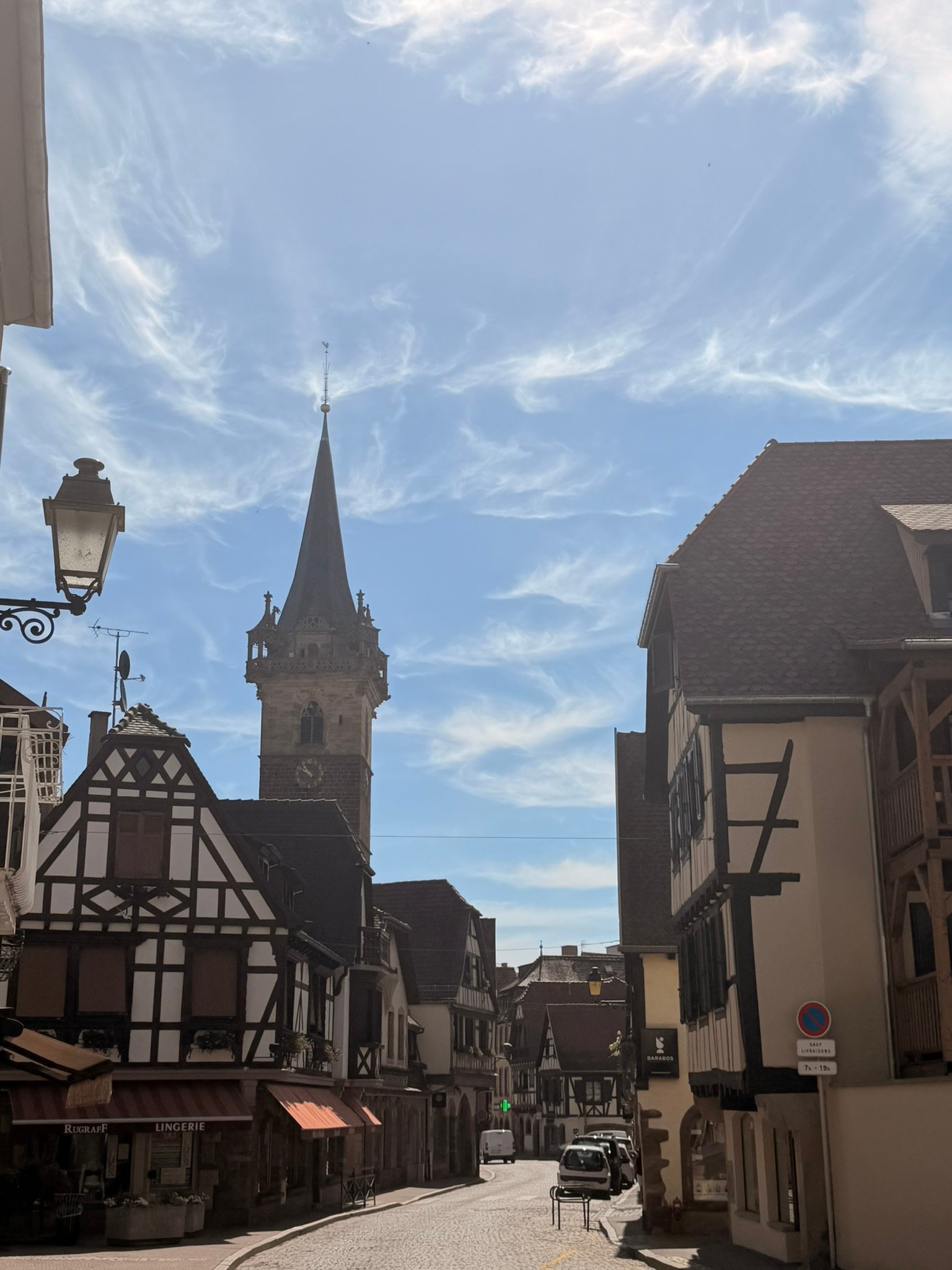
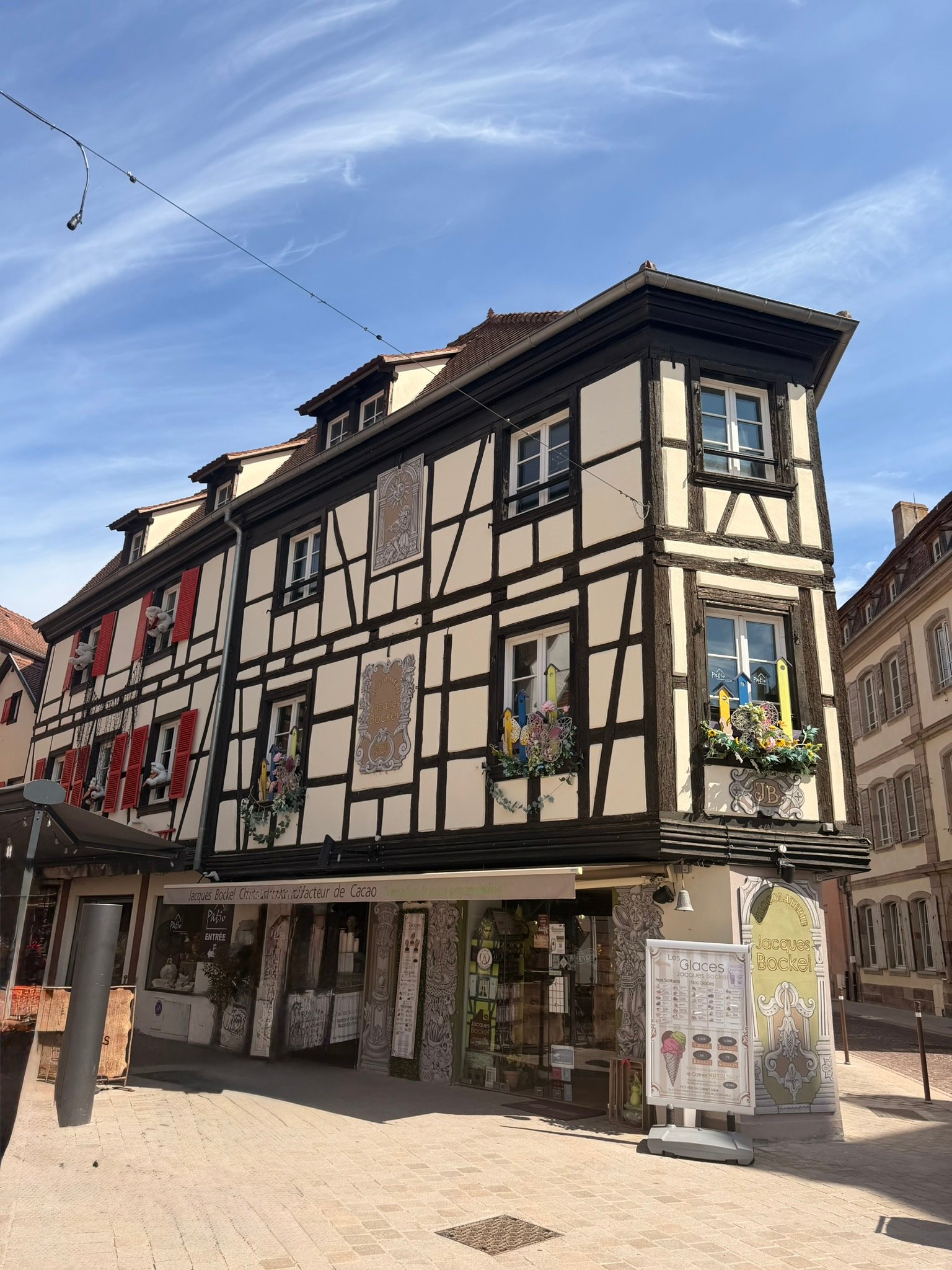
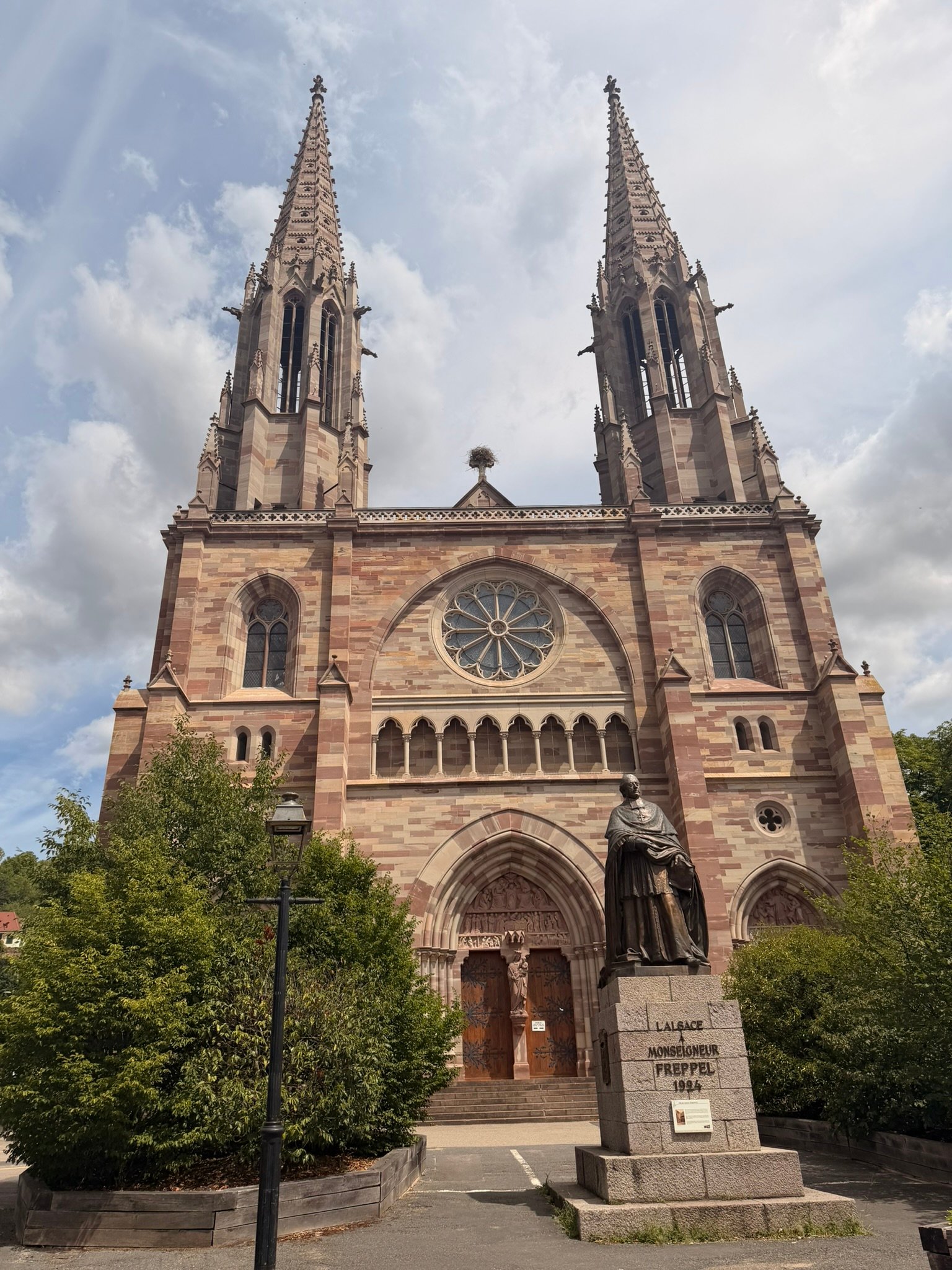
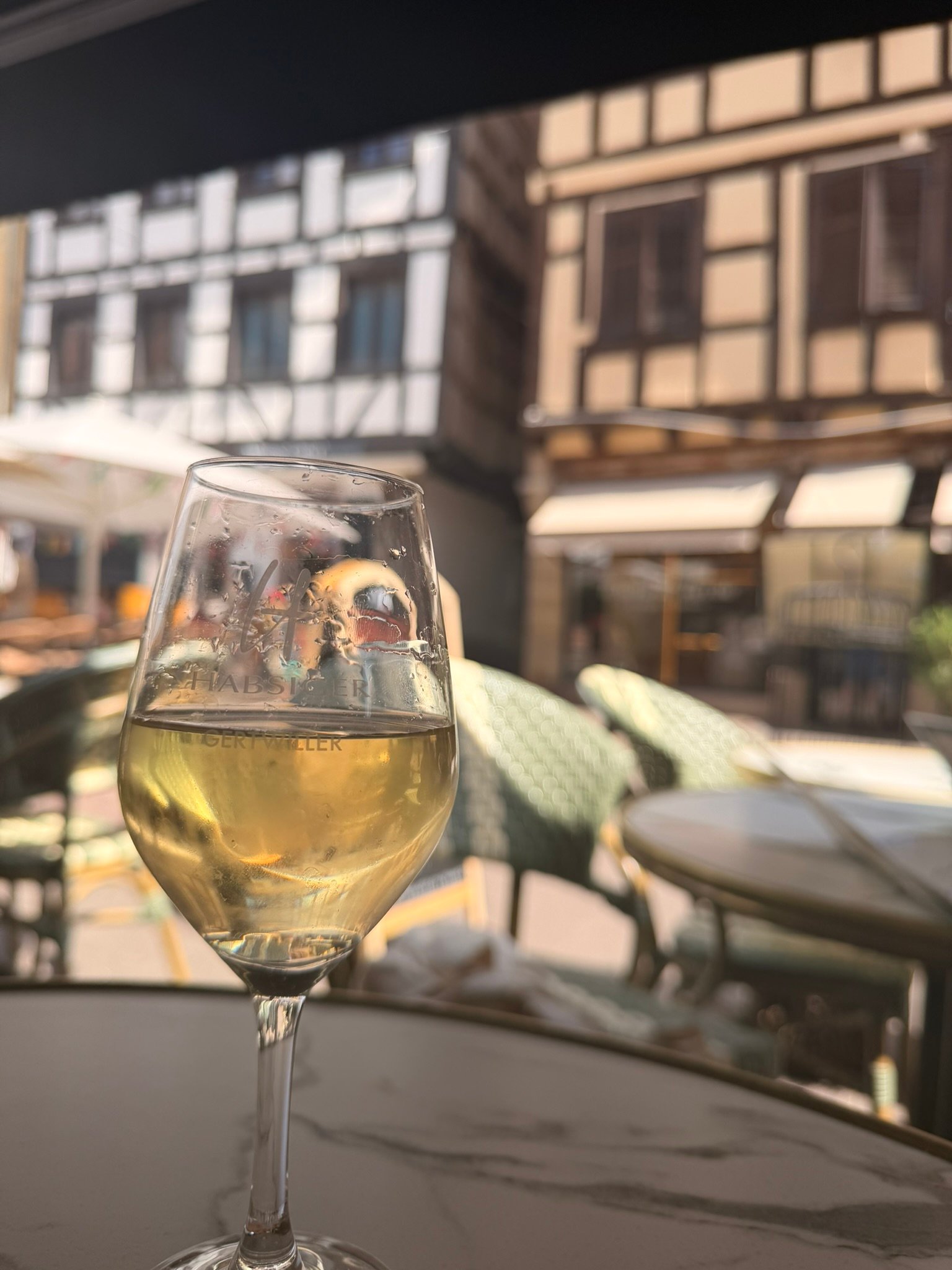
Obernai’s old town, and our first tarte flambée
Barr, Quiet and Unbothered
Barr was our third stop, and easily the quietest. Everything was shut when we arrived, mid-afternoon on what must have been the wrong day, but we didn’t mind at all. Sometimes a village is at its best with nobody trying to sell you anything. Barr is actually known as the wine capital of Alsace, home to the region’s oldest wine fair, and it’s a genuinely pretty place to just wander, no agenda required. We admired the Renaissance town hall, ambled the cobbled streets, and let Cookie sniff his way down half of them.
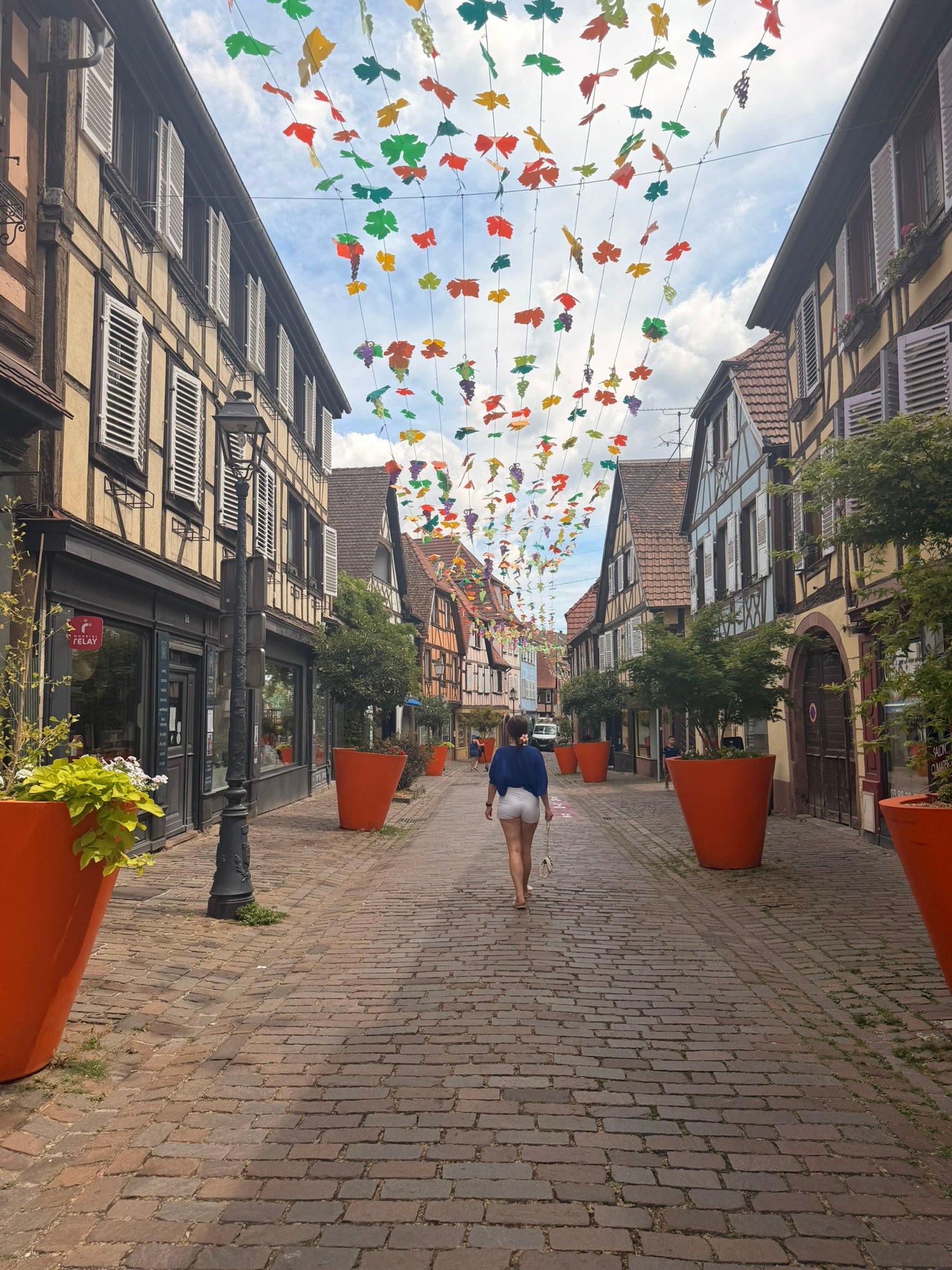
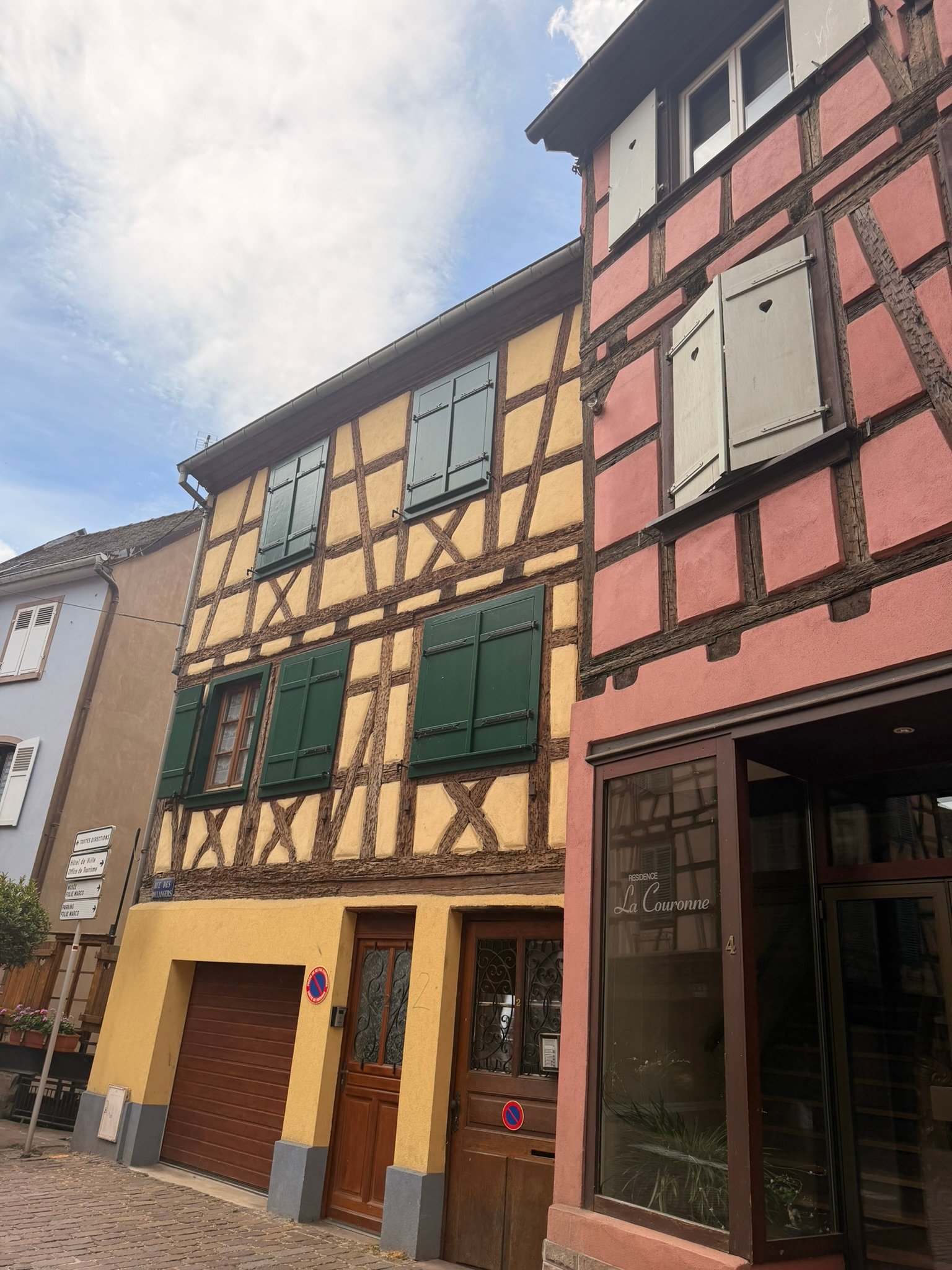
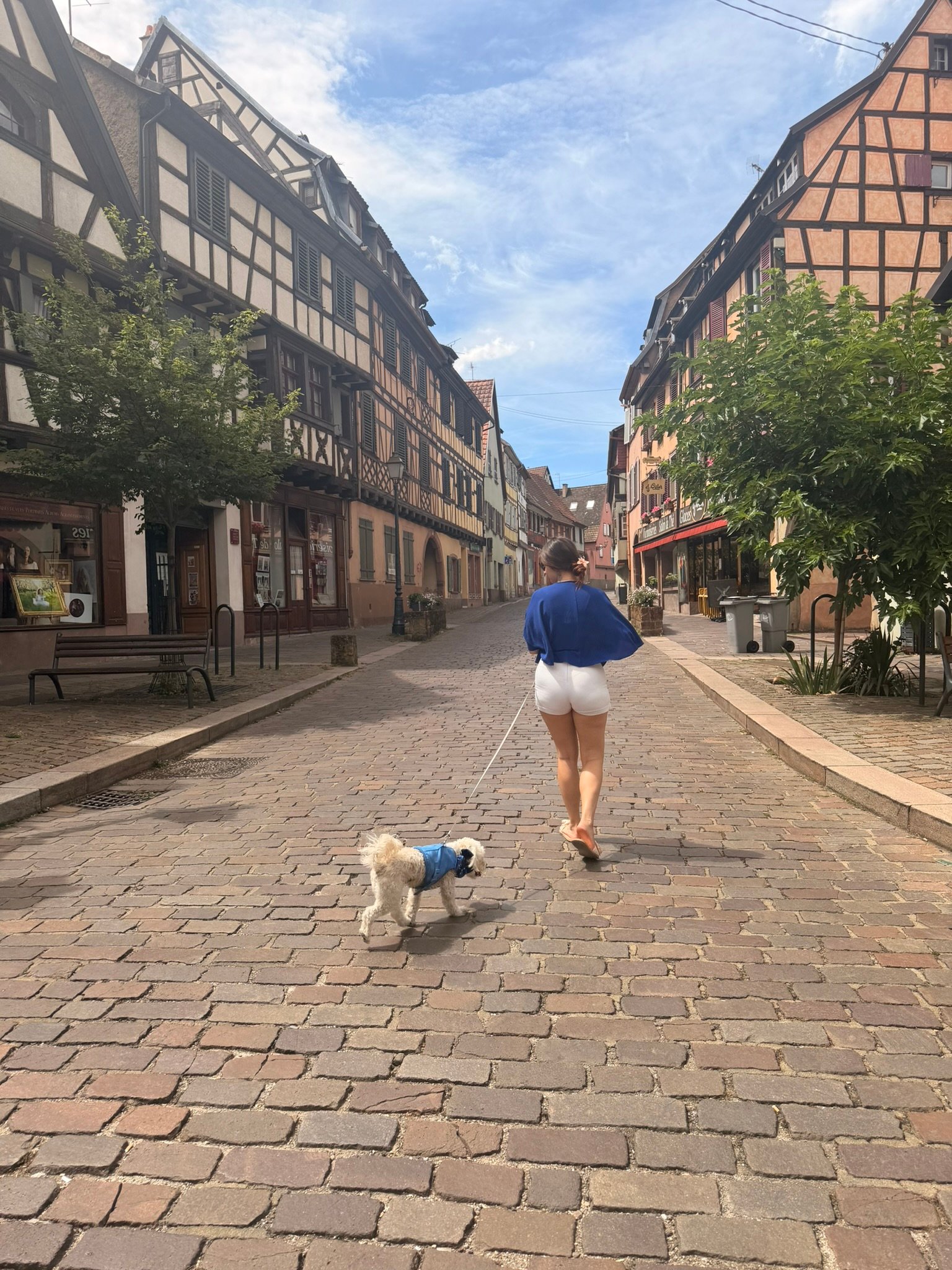
Barr, empty streets and all
Château du Haut-Koenigsbourg, Looming Overhead
From Barr we climbed up into the Vosges to the Château du Haut-Koenigsbourg, and it’s every bit as dramatic as it looks in photos. Perched at 757 metres, this fortress dates back to the 12th century and has an almost unbelievable backstory: besieged and left in ruins after the Thirty Years’ War, abandoned for two centuries, then dramatically rebuilt in the early 1900s under Kaiser Wilhelm II, who wanted a showpiece of medieval grandeur. On a clear day you can apparently see all the way to the Alps from up there.
We didn’t go inside, sadly. It’s not pet friendly, so we all stayed outside and wandered the surrounding forest instead, taking in the castle from the ground. Still worth the detour, even from the outside.
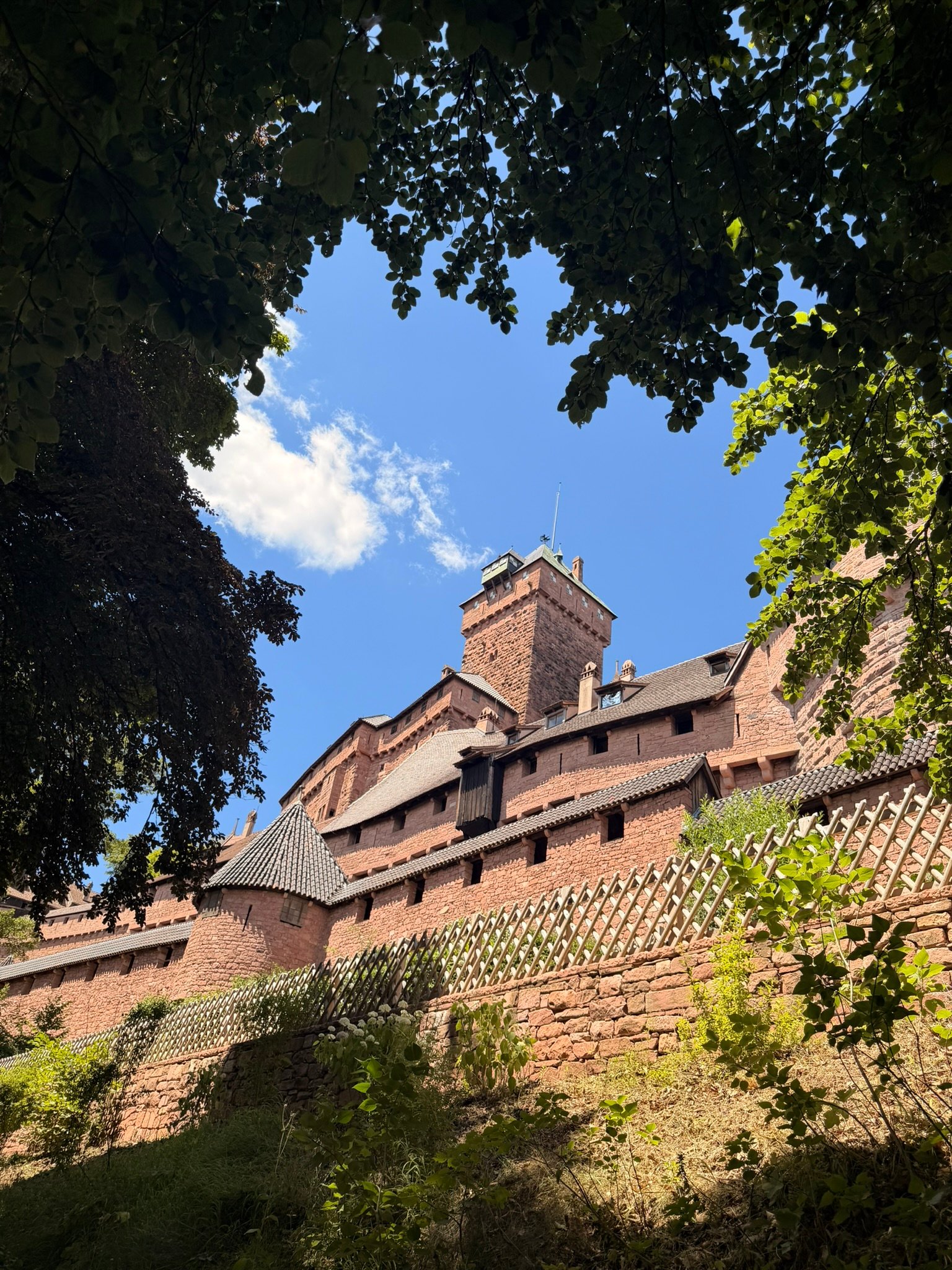
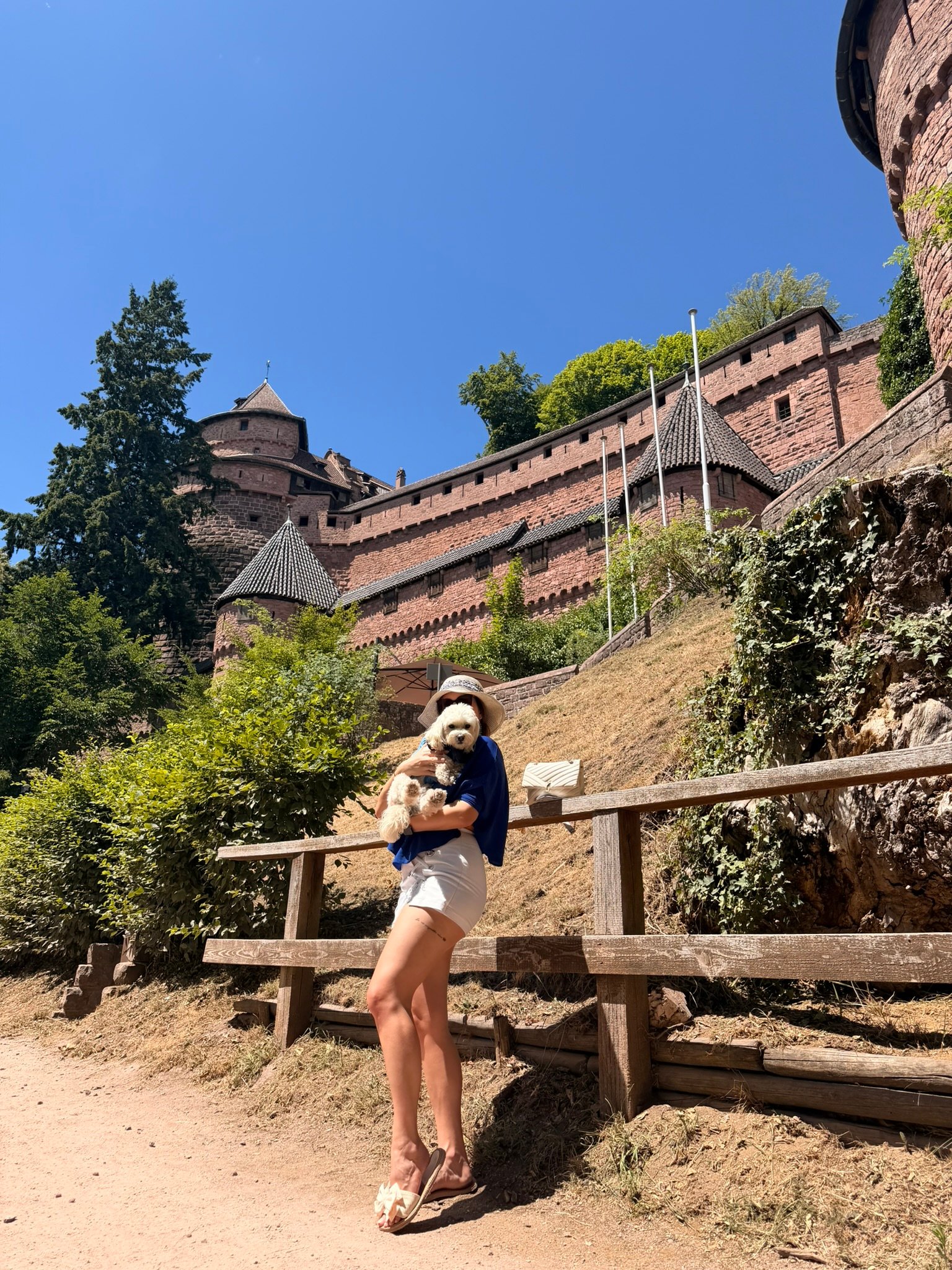
The Château du Haut-Koenigsbourg, from the forest below
Ribeauvillé, and the Highlight of the Day
Ribeauvillé might have been my favourite stop of the whole day. Three ruined castles watch over the town from the hills, the streets are properly medieval, and it has a slightly more lived-in, less polished feel than some of its neighbours, in the best way. We wandered, and then we did the thing I’d been hoping to do all day: a wine tasting at a proper local producer.
We found Domaine Schneider, a small family estate on Rue des Prunes that’s been passed down through three generations, now organic-certified. The tasting itself happened entirely in French, in an old cellar you enter through what looks like a garage, surrounded by wooden barrels. The owner didn’t speak a word of English, and it didn’t matter one bit. We left with several bottles of proper local wine and a much better understanding of what “authentic” actually means when it’s not a marketing word.
A local find
Domaine Schneider is a genuinely small operation, not a big commercial exporter, family-run since the 1950s and working around 8 hectares. If you want the kind of tasting where you’re standing in someone’s actual cellar rather than a tasting room built for tour buses, this is it.
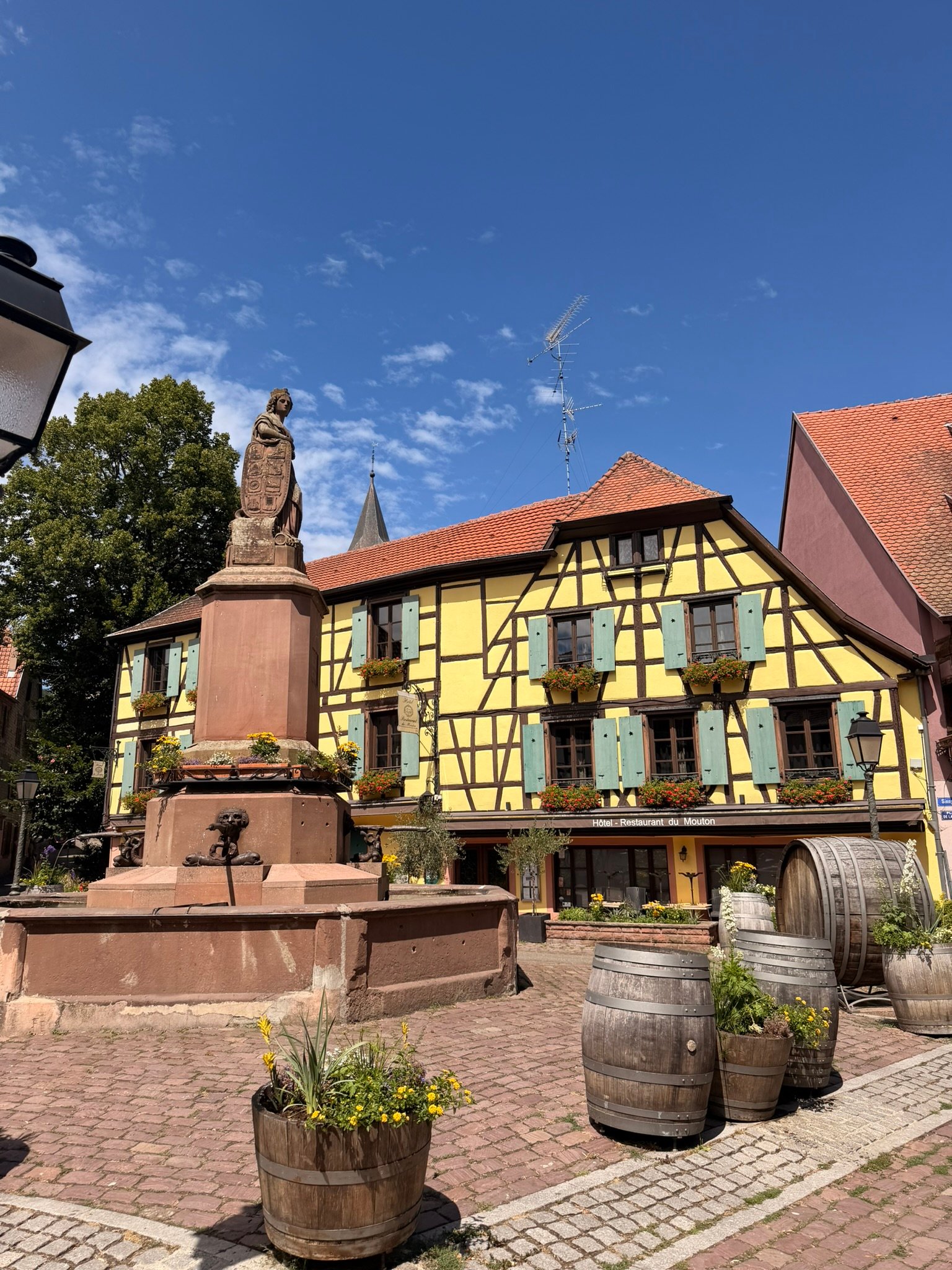
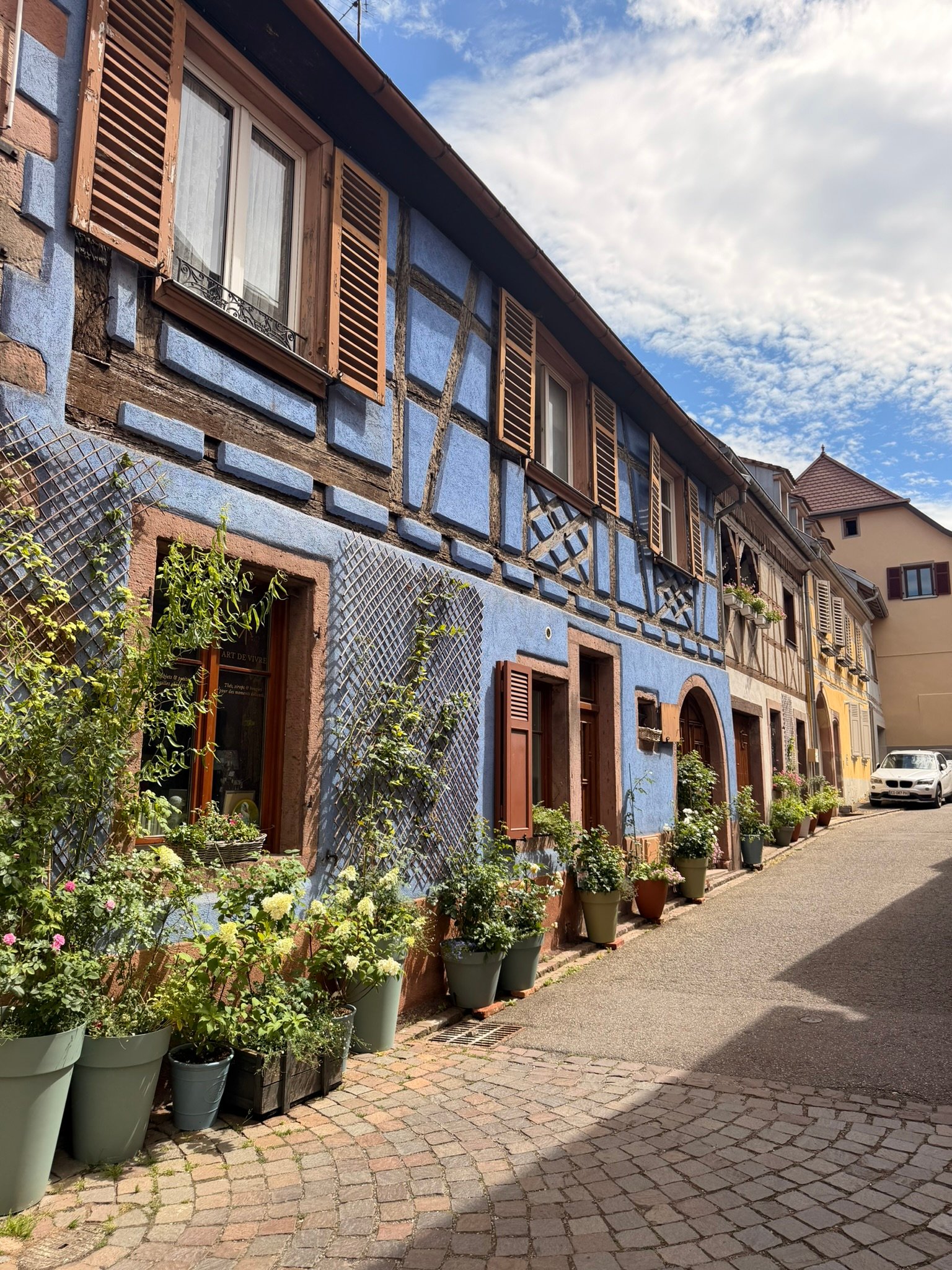
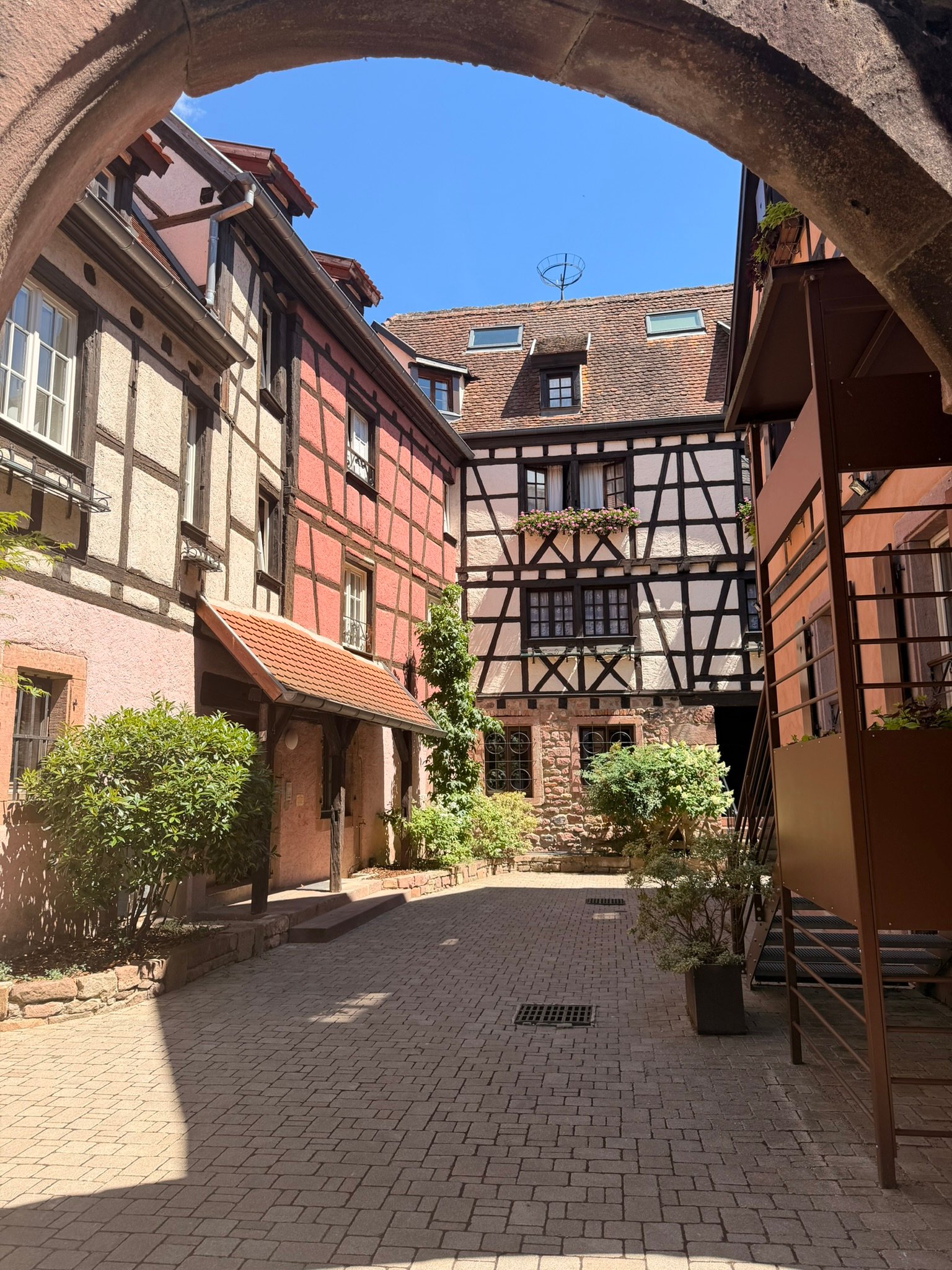
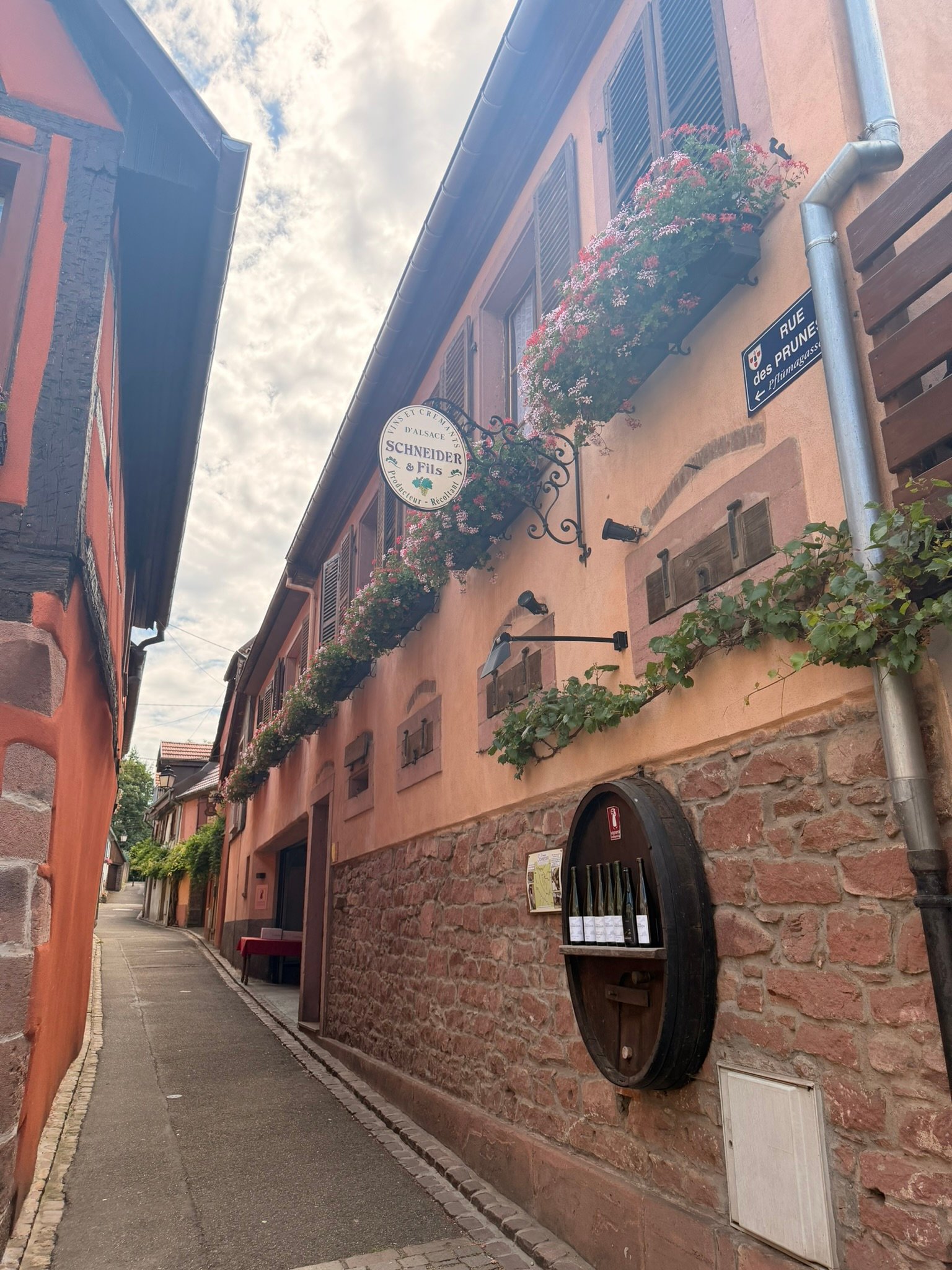
Ribeauvillé, and our wine tasting at Domaine Schneider
Riquewihr, Rushed but Radiant
By Riquewihr, I’ll be honest, we were starting to feel the day catching up with us. We still had a few towns left on the route before pushing on to Nancy, and Riquewihr deserved more time than we gave it. Still, even a rushed visit is worth it here. It’s a walled village that’s barely expanded since the Middle Ages, which is exactly why it’s stayed so intact, and the wealth from centuries of wine trading shows in every ornately carved merchant’s house. Blue, red, mustard yellow, every colour you can imagine on timber.
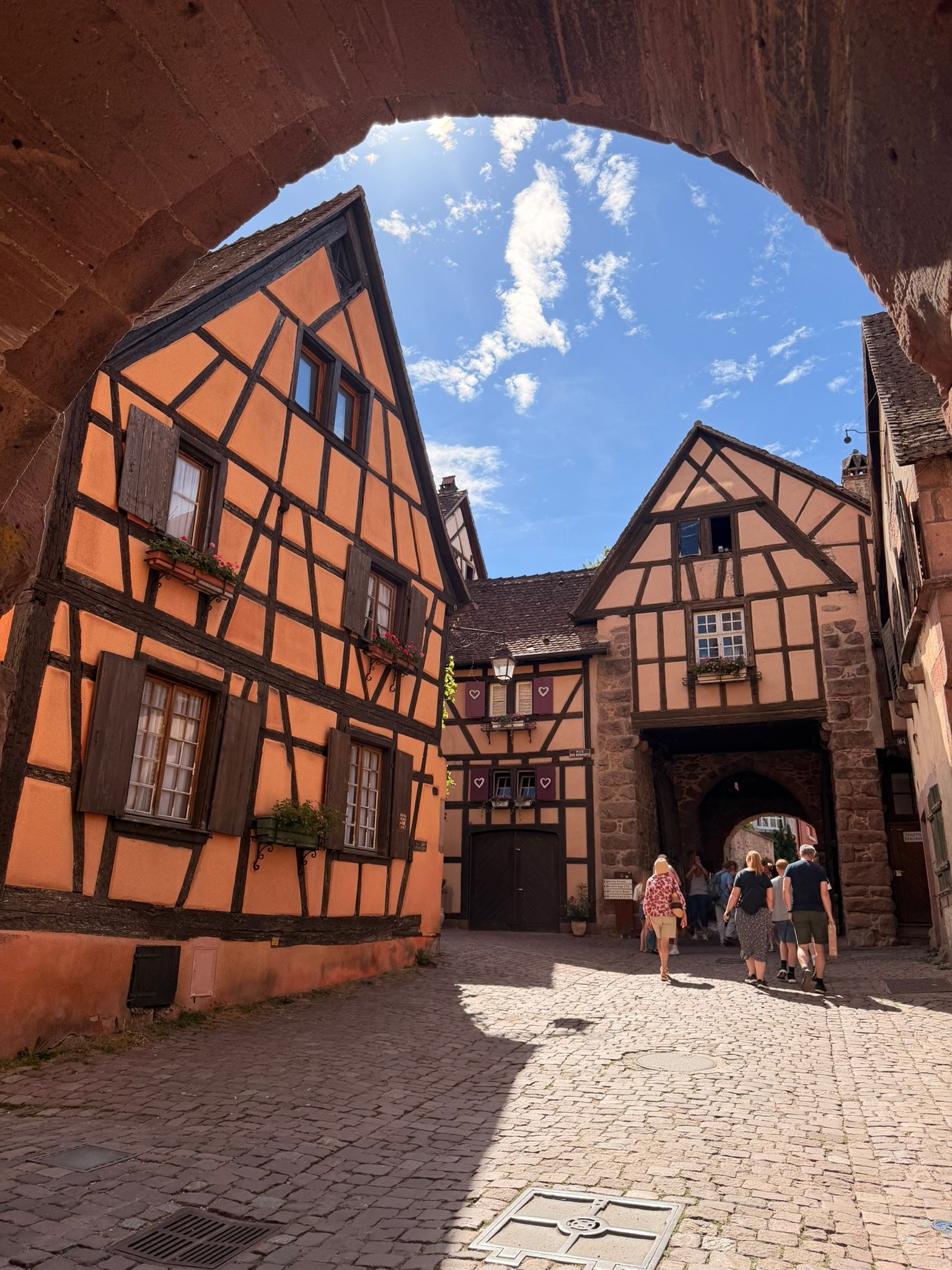
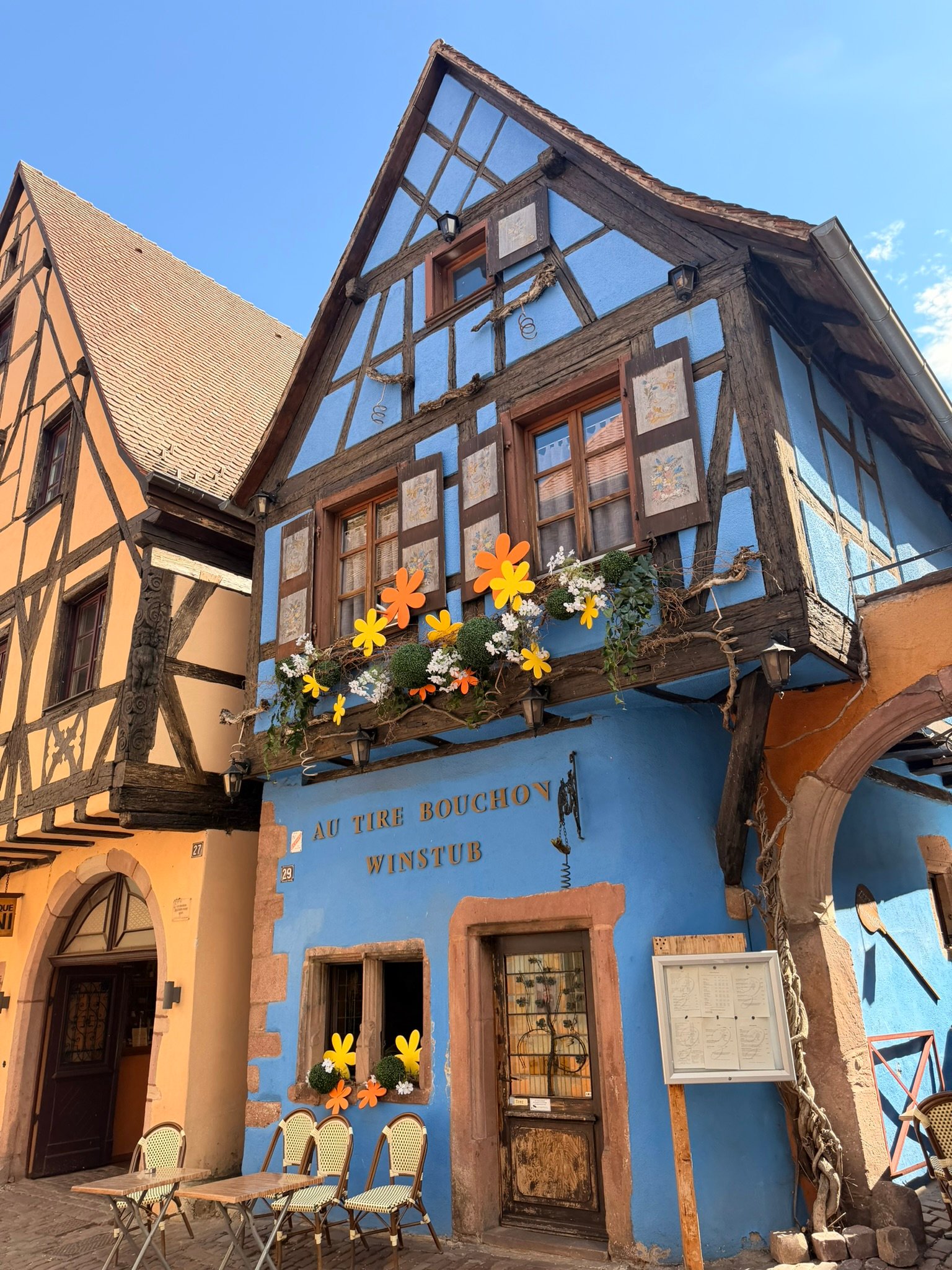
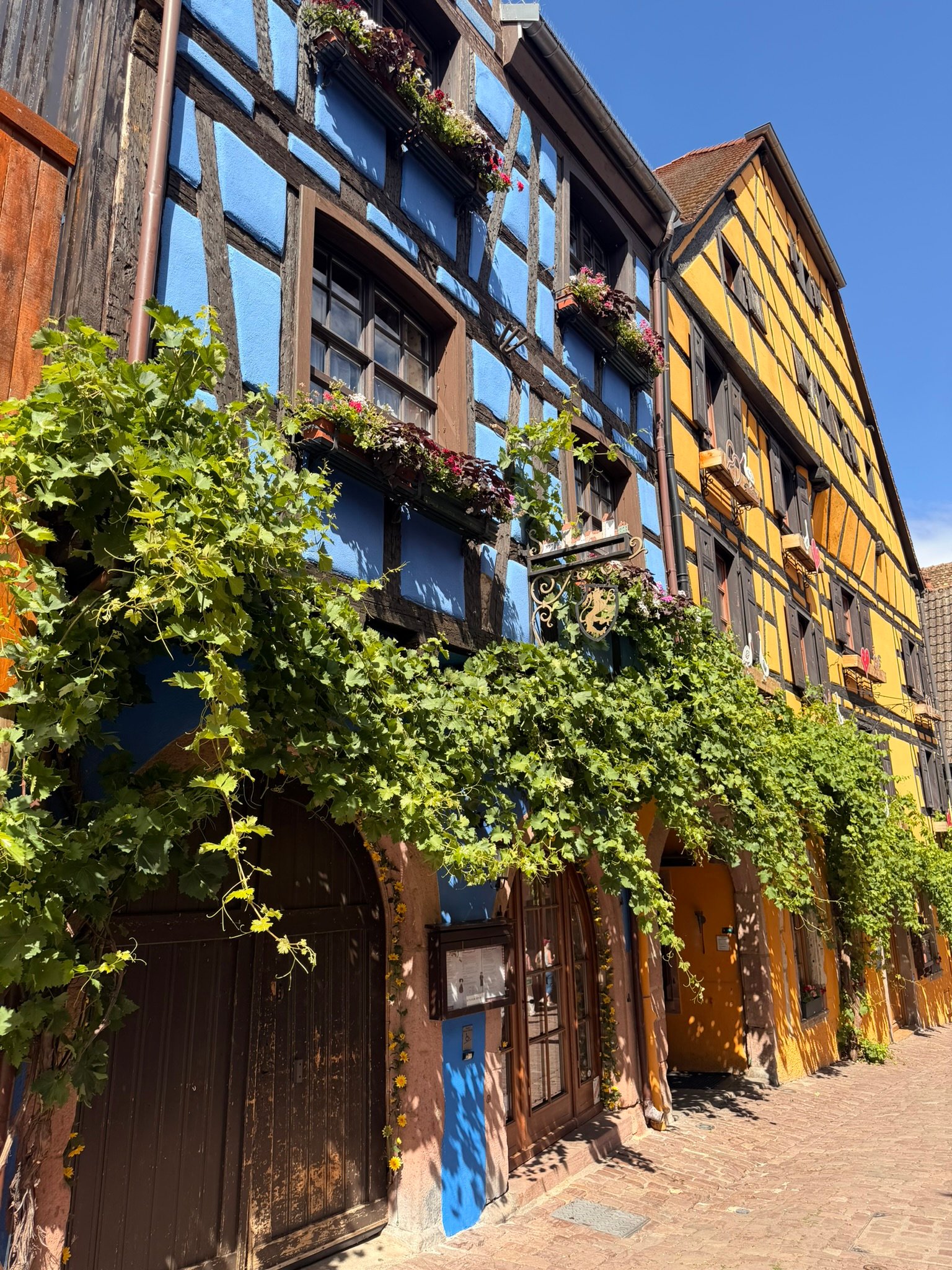
Riquewihr’s coloured timber houses
Kaysersberg, the Village That Started It All
Kaysersberg is, in a way, the town that made the wine route famous, voted France’s Favourite Village back in 2017, and it’s easy to see why. The Weiss river runs straight through the middle, crossed by a fortified bridge from 1514, with houses stacked up along the water on either side, which is the shot you’ve probably seen if you’ve ever searched “Alsace” online. There’s also a ruined castle above the town, though we were told it’s a decent climb, and by this point in the day, we simply didn’t have it in us.
We had a second wine tasting here and came away with, again, more bottles than strictly necessary. We spent about 90 minutes in Kaysersberg, longer than anywhere else that day, purely because we made ourselves slow down and actually take it in.
Worth knowing
Kaysersberg is also the birthplace of Albert Schweitzer, the Nobel Peace Prize-winning theologian and physician. His childhood home is now a small museum in the village.
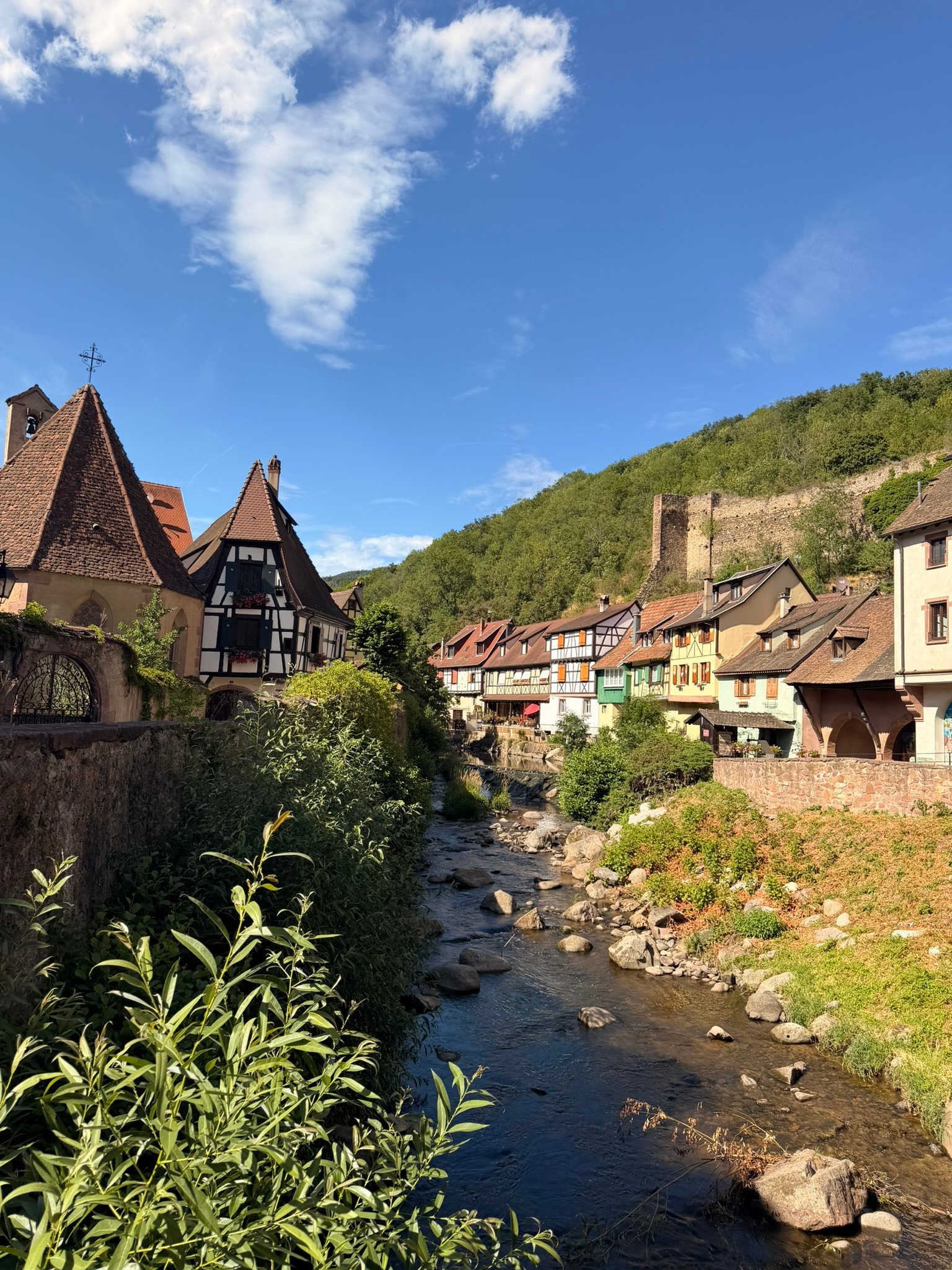
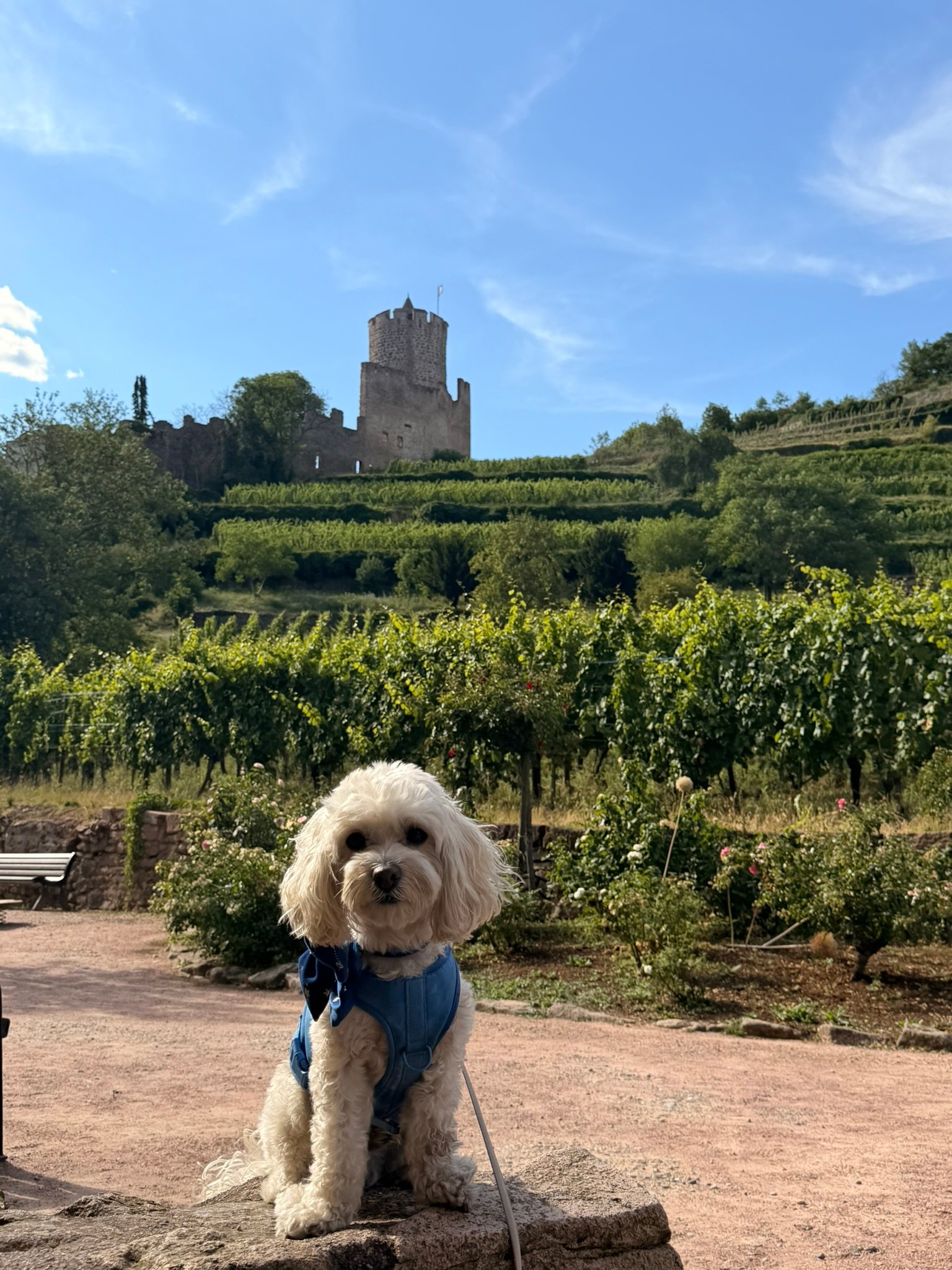
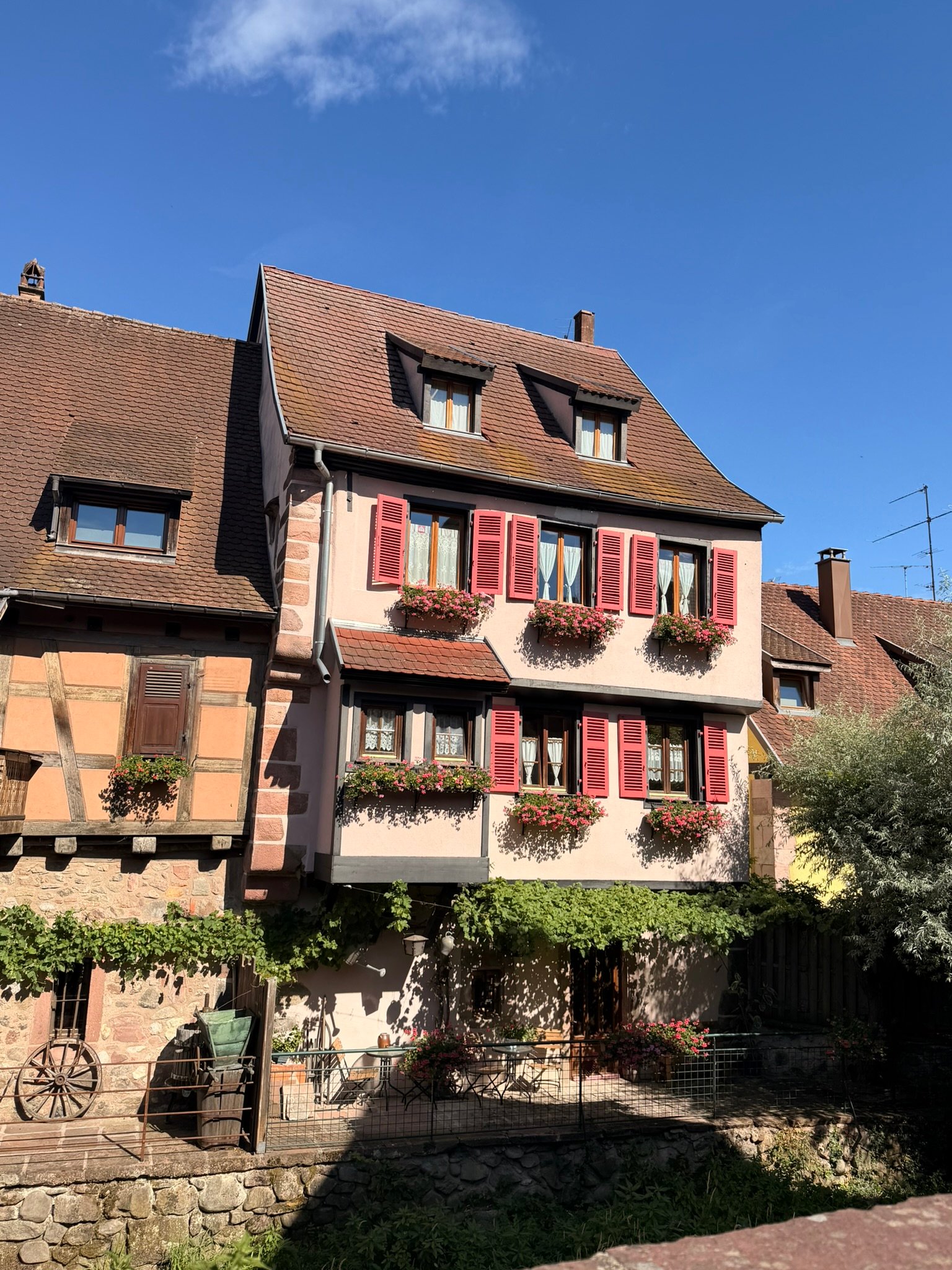
Kaysersberg, and the fortified bridge over the Weiss
Colmar, the End of the Road
Colmar was the city I’d wanted to see most out of the entire two weeks. And it fell a little flat. It’s a city, not a fairytale village like the internet had led me to expect, bigger, busier, with roadworks around most of the old town that made getting in harder than it should have been. The fairytale feeling was there in patches, in the Petite Venise canal district especially, but even that felt slightly overrun with restaurants crammed into a small space.
We arrived around 6.30pm, which meant almost everything except restaurants had closed for the day. So we did what you do: wandered a little, found dinner, and called it a day.
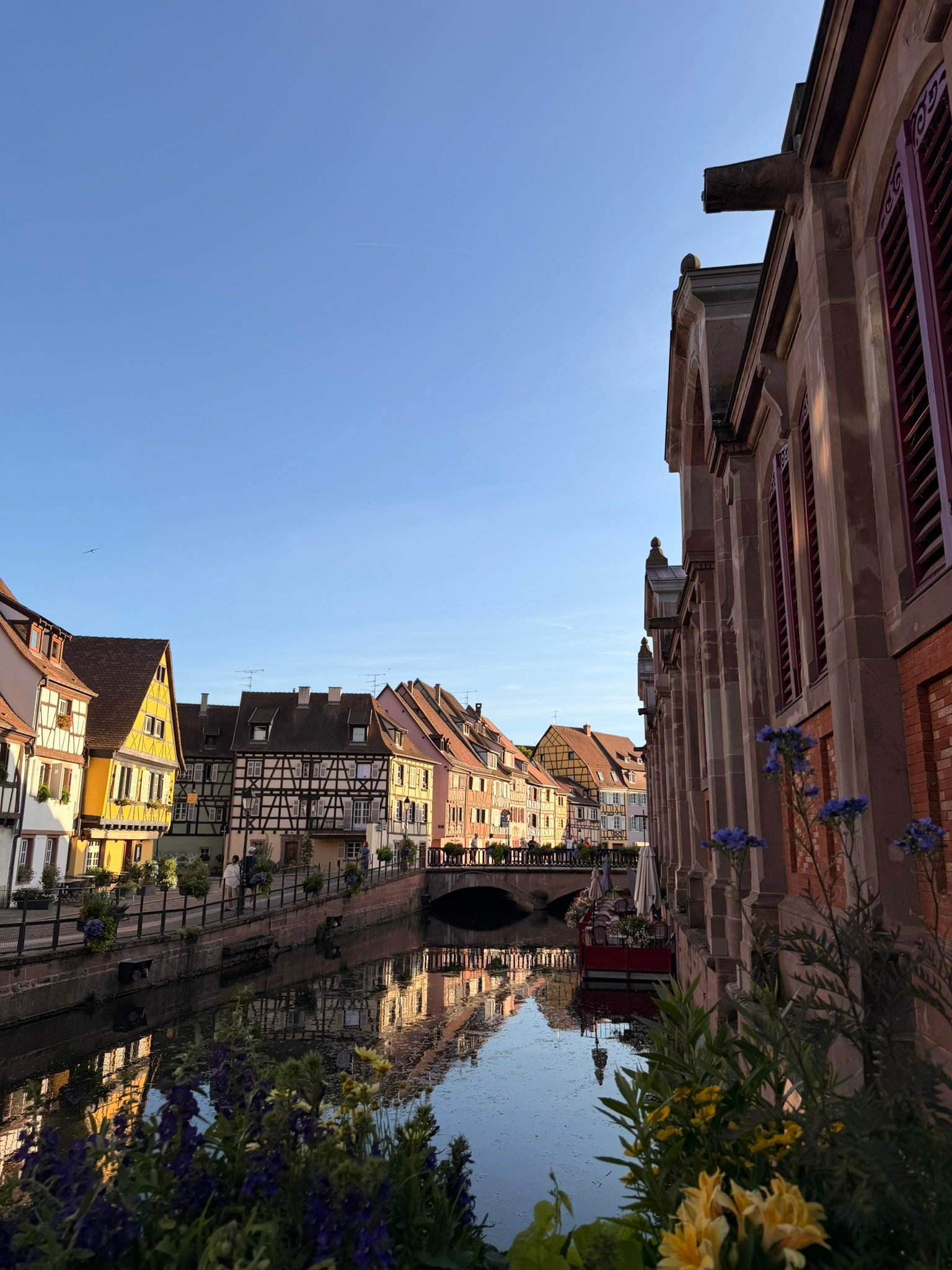
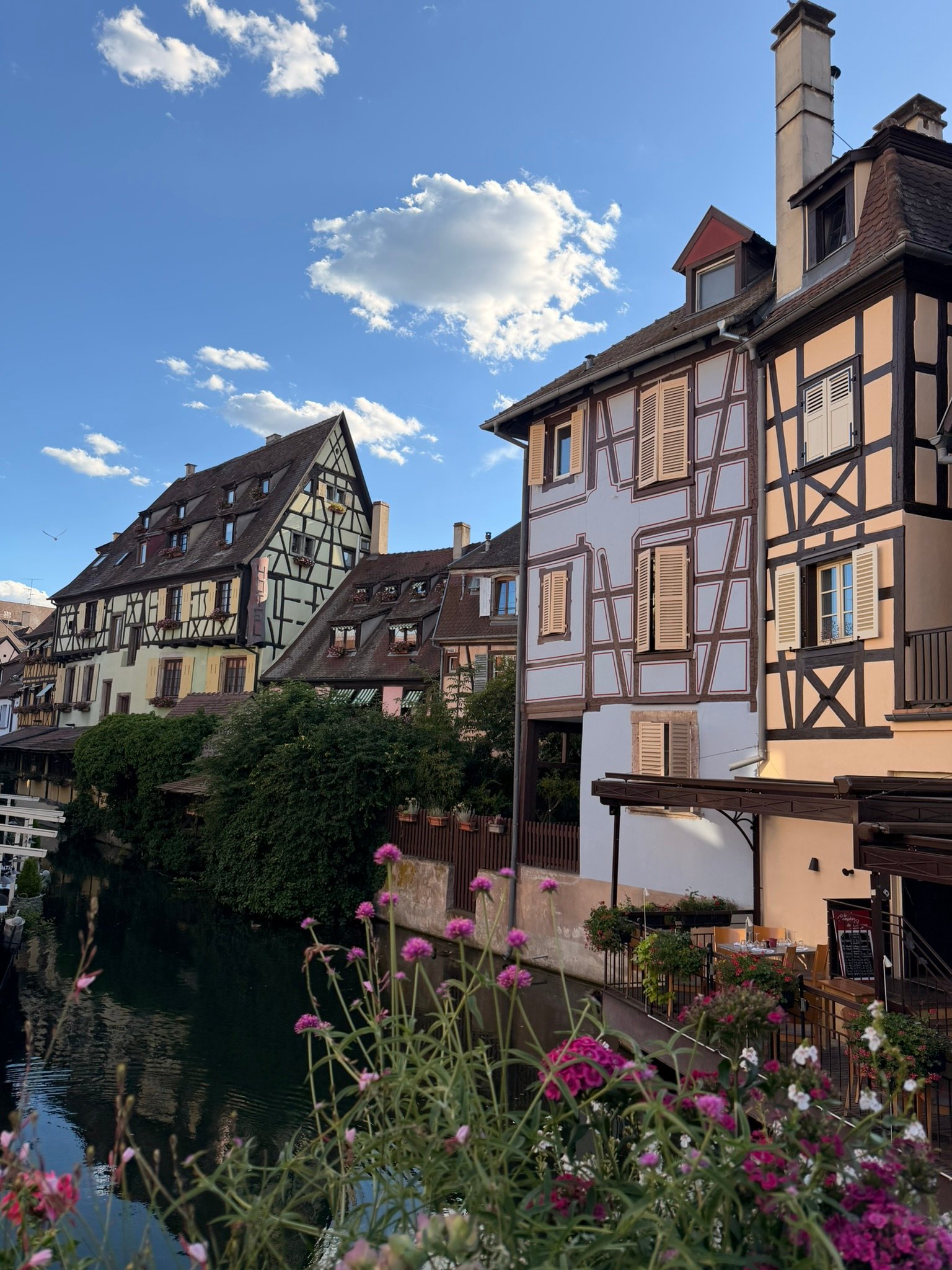
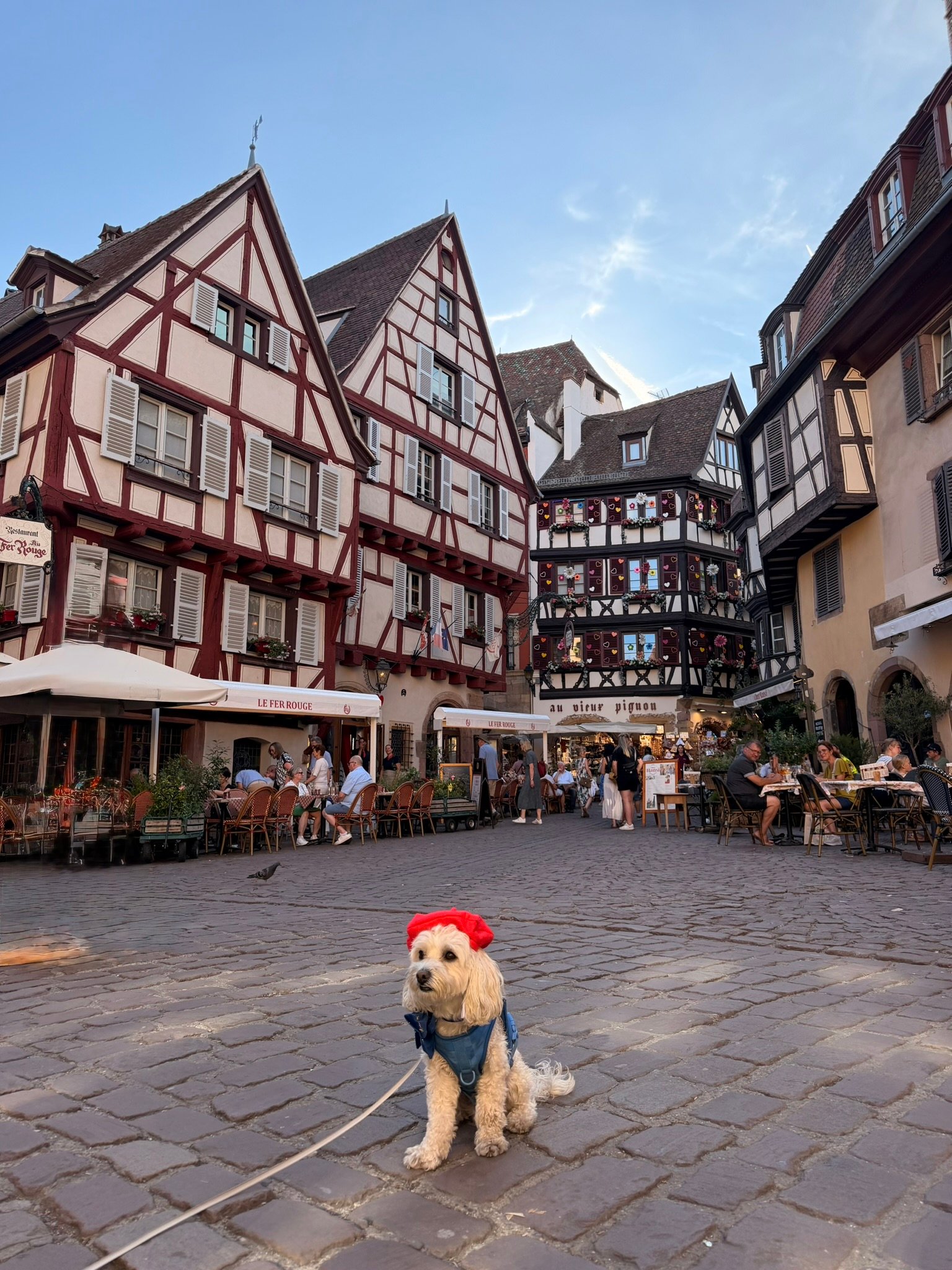
Colmar’s Petite Venise, at the end of a very long day
Our Route That Day: Marlenheim → Obernai → Barr → Château du Haut-Koenigsbourg → Ribeauvillé → Riquewihr → Kaysersberg → Colmar
What stayed with me
The vibe, honestly. The atmosphere, the quaint and whimsical feel of it, the peace it brought. Everything felt properly local, especially in Ribeauvillé, where the tasting happened entirely in French and the domaine was about as unpolished and genuine as it gets. If I had to pick a single highlight of the whole day, it’s that.
An honest note
We felt rushed in places, and any extra time spent somewhere meant skipping somewhere else. That one’s on us, really: we’d planned for four towns with time allocated to each, then the day before decided to go with the flow and add a few more villages, which I’m glad we did, but it meant cutting Eguisheim, which was meant to be our final stop.
The second thing was Colmar itself. After a day of small, quiet villages, it felt like the biggest let-down, heavily geared toward tourism in a way the smaller stops weren’t. If I’d known, I’d have gone to Eguisheim instead and skipped Colmar entirely.
Would I Recommend the Wine Route? Absolutely
If you only have one day, take a day trip from Colmar or Strasbourg and hit the highlights (see the activities below). But if you’re driving and have the time, give yourself 2-3 days to properly enjoy the main villages, or 3-4 to slow right down, see the smaller towns, and stop rushing from one place to the next. We learned that lesson the hard way.
If You Only Have One Day on the Wine Route
- Château du Haut-Koenigsbourg
- Riquewihr
- Kaysersberg
- Colmar
Things to Do If You Spend More Days on the Wine Route
- Marlenberg chapel viewpoint, Marlenheim
- Kappellturm belfry and old town, Obernai
- Quiet streets of Barr
- Three Castles trail, Ribeauvillé
- Wine tasting at a local domaine
- Fortified bridge, Kaysersberg
- Eguisheim, one of France’s official “most beautiful villages”
- Hunawihr, quieter and known for its fortified church and stork park
- Turckheim, less touristy with a small WWII museum
- Mittelbergheim, pink and beige stone rather than half-timbering
- Andlau, known for its abbey and surrounding vineyards
Things to Eat, If You Have Room
- Tarte flambée (flammekueche)
- Kougelhopf, the local brioche
- Baeckeoffe, slow-cooked meat and potato casserole
- Choucroute garnie, Alsatian sauerkraut
- Alsatian gingerbread (pain d’épices)
- A glass (or several) of local Riesling or Gewurztraminer
How to Visit Without a Car
We drove ourselves, but if you’re not renting a car, here’s how to see the route anyway.
Hop-On Hop-Off Wine Route Bus
An open-top bus loops through Colmar, Ribeauvillé, Riquewihr, Kaysersberg, Turckheim and Eguisheim, with a day ticket letting you hop off and explore each stop at your own pace before catching the next bus round.
Book ThisFrom Colmar: Castle, Villages & Wine Tasting
A small group day trip from Colmar covering the Château du Haut-Koenigsbourg, Riquewihr and a guided wine tasting, ideal if you’d rather someone else handles the driving.
Book ThisFrom Strasbourg: Colmar, Riquewihr & the Castle
A full day trip from Strasbourg taking in the Château du Haut-Koenigsbourg, Colmar and Riquewihr, a good option if you’re basing yourself in the city and want a taste of the wine route in one day.
Book ThisGuided Wine Tasting & Immersive Cellar Tour
What we’d have booked with more time: a guided tasting through a family winery, with an immersive cellar experience projected onto century-old oak barrels. A step beyond the casual tastings we did along the way.
Book ThisSee things to do in Strasbourg in Episode 9.
Want to take your pet to Europe? Here’s my free guide.
If you’ve got questions, want to share your own experience, or just want to say hello, I’d love to hear from you.
Welcome to the travel diary. I’m glad you’re here.
– Elena (and Cookie 🐾)
Follow us on